Florida Department of Environmental Protection Florida Department of Environmental Protection
 
* DEP Home * About DEP * Programs * Contact * Site Map * Search
MyFlorida.com  
tab Facts about Mangroves in Florida

Mangroves are tropical plants that are adapted to loose, wet soils, salt water, and being periodically submerged by tides.

Four major factors appear to limit the distribution of mangroves: climate, salt water, tidal fluctuation and soil type.

There are more than 50 species of mangroves found throughout the world. Three species of mangroves are native to Florida: Red mangrove (Rhizophora mangle), Black mangrove (Avicennia germinans) and White mangrove (Laguncularia racemosa).

MANGROVE FUNCTIONS AND VALUES:

Mangroves trap and cycle various organic materials, chemical elements, and important nutrients in the coastal ecosystem.

Mangroves provide one of the basic food chain resources for marine organisms.
 

Mangroves provide physical habitat and nursery grounds for a wide variety of marine organisms, many of which have important recreational or commercial value.

Mangroves serve as roosting and nesting sites for many of our birds.

Mangroves serve as storm buffers by reducing wind and wave action in shallow shoreline areas.

Mangroves assist in protecting water quality and clarity by filtering runoff and trapping sediments and debris from adjacent uplands.
 

Through a combination of the above functions, mangroves contribute significantly to the economy of many coastal counties of Florida and the State of Florida.

MANGROVE TRIMMING AND ALTERATION REGULATIONS:
The law regulating the trimming and alteration of mangroves (The Mangrove Trimming and Preservation Act) was amended by the 1996 Florida Legislature and became effective July 1, 1996, replacing all previous state regulations regarding the trimming and alteration of mangroves. The Department of Environmental Protection (department) has been given the responsibility of implementing the new law.

No herbicide or other chemical may be used for the purpose of removing leaves of a mangrove.

The following are definitions for terms used in the new law:

1. 'Alter' means anything other than trimming of mangroves.

2. 'Trim' means to cut mangrove branches, twigs, limbs, and foliage but does not mean to remove, defoliate, or destroy the mangroves.

3. 'Riparian mangrove fringe' means mangroves growing along the shoreline on private property, property owned by a governmental entity, or sovereign submerged land (submerged state-owned land), that do not extend more than 50 feet waterward, as measured from the trunk of the most landward mangrove tree, in a direction perpendicular to the shoreline to the trunk of the most waterward mangrove. Riparian mangrove fringe does not include mangroves on uninhabited islands, or public lands that have been set aside for conservation or preservation**, or mangroves on any lands that have been set aside as mitigation, unless provisions for trimming are provided in the instrument that established the mitigation.

4. 'Professional mangrove trimmer' the following persons are qualified as professional mangrove trimmers:

a) Certified Arborists, certified by the International Society of Arboriculture;

b) Professional wetland scientists, certified by the Society of Wetland Scientists;

c) Certified environmental professionals, certified by the Academy of Board Certified Environmental Professionals;

d) Certified ecologists, certified by the Ecological Society of America;

e) Licensed Landscape Architects; and

f) Persons that have been granted professional mangrove trimmer status by the Department of Environmental Protection.

5. 'Department' means the Florida Department of Environmental Protection.

6. 'Delegated' local government means a county or municipality that has received delegation of authority, from the department, to regulate the trimming and alteration of mangroves within the jurisdictional boundaries of the delegated local government.

EXEMPTIONS: (mangrove trimming activities that do not require a permit from the department or delegated local government)

* No permit is required for a property owner, or someone the property owner supervises, to trim mangroves located in a riparian mangrove fringe on property they own or control or on sovereign submerged lands (see next paragraph), if the current height of the trees do not exceed 10 feet in height (measured from the soil to the tallest point of the tree). These trees may be trimmed down to a height of no less than 6 feet (measured from the soil to the top of the trimmed tree) by the property owner or someone they supervise. If the mangrove trees are taller than 10 feet, the property owner must use a professional mangrove trimmer to trim the trees. Trees must not be trimmed below a height of six feet. If the shoreline along the riparian owners property exceeds 150 feet in length, no more than 65% of the mangroves along the shoreline may be trimmed.

**Sarasota County has designated many mangrove areas as conservation or preservation under the County's comprehensive plan. This measure protects mangroves on public lands (this includes many areas below the mean high water line) in Sarasota County from being trimmed under the riparian mangrove fringe exemptions without a DEP issued permit. Permits may be issued for trimming in these areas which allow riparian owners to create a view of the water while also protecting the viability and functions of the mangroves.

Trimming of mangroves in a riparian mangrove fringe area that exceed 10 feet in pretrimmed height, must be supervised or conducted exclusively by a professional mangrove trimmer. The mangroves must be located on lands owned or controlled by the professional mangrove trimmer, or the person contracting with the professional mangrove trimmer, or on sovereign submerged lands (state-owned submerged lands) immediately waterward and perpendicular to such lands. Mangroves that are taller than 24 feet cannot be trimmed and no mangrove may be trimmed below a height of 6 feet under this exemption. Mangroves that are 16 to 24 feet in height must be trimmed in stages so that no more than 25 percent of their foliage is removed within a one year period. If red mangroves are being trimmed for the first time under this exemption, the professional mangrove trimmer must notify the department or delegated local government, in writing, at least 10 days before the trimming activities begin. If the shoreline along the riparian owners property exceeds 150 feet in length, no more than 65% of the mangroves along the shoreline may be trimmed.

No permit is required to trim mangroves, that are located in a riparian mangrove fringe, to reestablish or maintain a previous mangrove configuration so long as the trees do not exceed 24 feet in pretrimmed height and the trees are not destroyed, defoliated or removed. If the trees are currently taller than 10 feet (measured from the soil to the tallest point of the tree) a professional mangrove trimmer must be used to conduct the trimming. Proof of the previous mangrove configuration must be available through an affidavit from someone with personal knowledge of the previous configuration, current or past permits, or photographs. If red mangroves are being trimmed for the first time, the department or delegated local government must be notified in writing at least 10 days before the trimming occurs.
 

Mangroves trimmed under an exemption or government authorization can be maintained without a permit so long as the specifications of the exemption or government authorization are not exceeded (e.g., height, configuration). Trimming under this exemption is not limited to trees located in a riparian mangrove fringe.

Various exemptions are provided for mangrove trimming by surveyors, and governmental entities.

PERMITS:

Persons wishing to conduct mangrove trimming activities that do not qualify for one of the exemptions described above, and the mangroves proposed to be trimmed are located in a fringe that is 500 feet in width or less and not located within the jurisdictional boundaries of a delegated local government, must apply for a general permit from the department.

Persons wishing to conduct mangrove alteration or trimming activities that do not qualify for one of the exemptions or general permits, must apply for an individual permit to alter or trim mangroves from the department or a delegated local government.

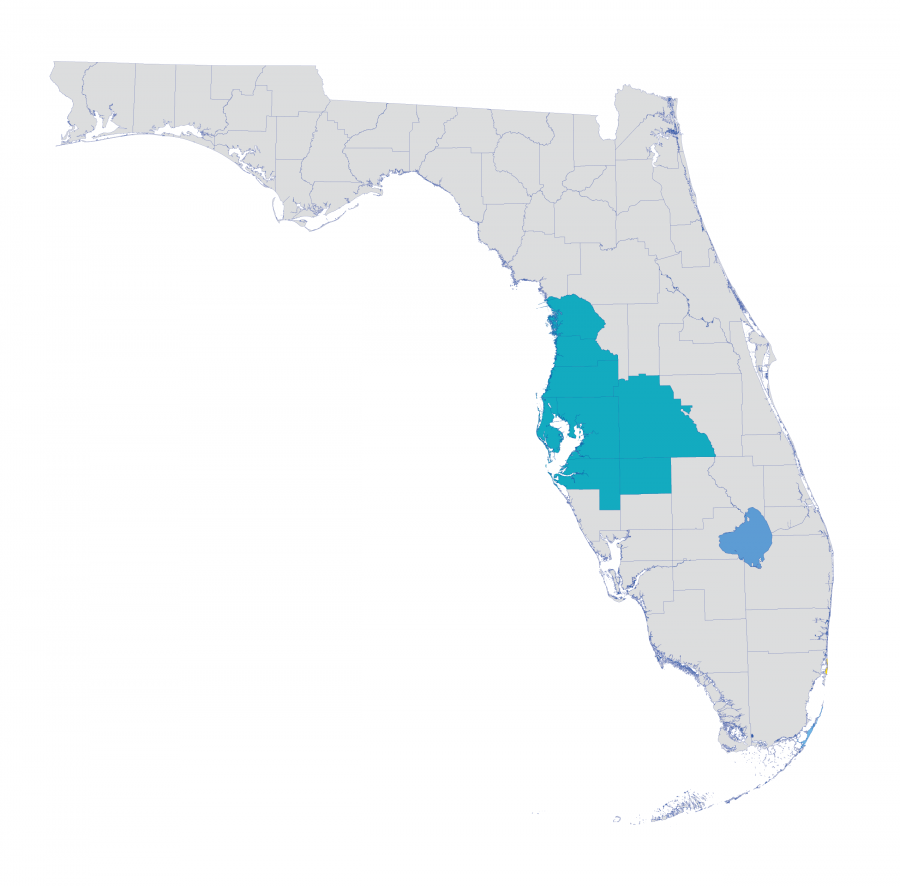
For more information on mangrove regulations, contact the Southwest District Office of the Department at 813-632-7600. In Hillsborough and Pinellas counties are delegated, please contact the agencies below:

Hillsborough County (813) 627-2600
Pinellas County (727) 453-3385


Last updated: January 02, 2013

 
D.E.P. Southwest District - TAMPA
13051 N. Telecom Parkway Temple Terrace, Fl. 33637 Phone: 813-632-7600 Fax: 813-632-7665
Contact Southwest District 
DEP Home | About DEP  | Contact Us | Search |  Site Map