"Solid waste" means : sludge
unregulated under the Clean Water Act or Clean Air Act; sludge from a
waste water treatment works, water supply treatment plant, or air
pollution control facility; garbage, rubbish, refuse, special waste, or
other discarded material resulting from domestic, industrial, commercial,
mining, agricultural, or government operations. Materials not regulated as
solid waste pursuant to this Chapter are; recovered materials, nuclear
source or byproduct materials regulated under Chapter 404, Florida
Statutes, or under the Federal Atomic Energy Act of 1954 as amended;
suspended or dissolved materials in domestic sewage effluent or irrigation
return flows, or other regulated point source discharges; regulated air
emissions; and fluids or wastes associated with natural gas or crude oil
exploration or production.
All waste that is not a Listed
Hazardous or Characteristic Hazardous Waste is a solid waste. Refer
to the Hazardous Waste Program summary for specifics.
Other Definitions:
"Clean Debris"
means any solid waste which is virtually inert, which is not a
pollution threat to ground water or surface waters, is not a fire hazard,
and is likely to retain its physical and chemical structure under expected
conditions of disposal or use. The term includes brick, glass, ceramics, and
uncontaminated concrete including embedded pipe or steel. means any solid
waste which is virtually inert, which is not a pollution threat to
ground water or surface waters, is not a fire hazard, and is likely to
retain its physical and chemical structure under expected conditions of
disposal or use. The term includes brick, glass, ceramics, and
uncontaminated concrete including embedded pipe or steel.
"Special wastes" means
solid waste that can require special handling and management, including but
not limited to, white goods, waste tires, used oil, lead acid batteries,
construction and demolition debris, ash residue, yard trash and biological
wastes. Other special wastes identified through recent Department policies
include fluorescent light bulbs, mercury containing devices such as
thermostats and bilge pumps, mercury containing lamps, and dry cell and
rechargeable batteries. means solid waste that can require special handling
and management, including but not limited to, white goods, waste tires, used
oil, lead acid batteries, construction and demolition debris, ash residue,
yard trash and biological wastes. Other special wastes identified through
recent Department policies include fluorescent light bulbs, mercury
containing devices such as thermostats and bilge pumps, mercury containing
lamps, and dry cell and rechargeable batteries.
"Recovered
materials" means metal, paper,
glass, plastic, textile, or rubber materials that have known recycling
potential, can be feasibly recycled, and have been diverted and source
separated or have been removed from the solid waste stream for sale, use, or
reuse as raw materials, whether or not the materials require subsequent
processing or separation from each other, but does not include materials
destined for any use that constitutes disposal. Recovered materials as
described above are not solid waste. means metal, paper, glass, plastic,
textile, or rubber materials that have known recycling potential, can be
feasibly recycled, and have been diverted and source separated or have been
removed from the solid waste stream for sale, use, or reuse as raw
materials, whether or not the materials require subsequent processing or
separation from each other, but does not include materials destined for any
use that constitutes disposal. Recovered materials as described above are
not solid waste.
PERMITTING SECTION
In accordance with FS
62-701.320 "No solid waste management facility shall be constructed,
operated, maintained, modified, or closed without a permit issued by the
Department."
The management of a solid
waste facility requires a specific authorization through a permit issued by
the Florida Department of Environmental Protection. In addition to an
application and fee for permitting of a solid waste facility the Department
requires that a comprehensive engineering report and an operational plan be
submitted and approved by the Department. The engineering report and
operational plan shall include, but not limited to, a geological and
hydrogeological investigation, groundwater monitoring plan, stormwater
system design, compliance procedures with the prohibitions as noted in FS
62-701.300, comprehensive engineering drawings for the liner and the
leachate collection system, verification of training requirements, hours of
operation, waste screening procedures, contingency plans, waste quantity
reports, litter control, erosion control, and gas monitoring. The permitting
engineers are tasked with permitting and reviewing all submittals to assure
compliance with all applicable regulations.
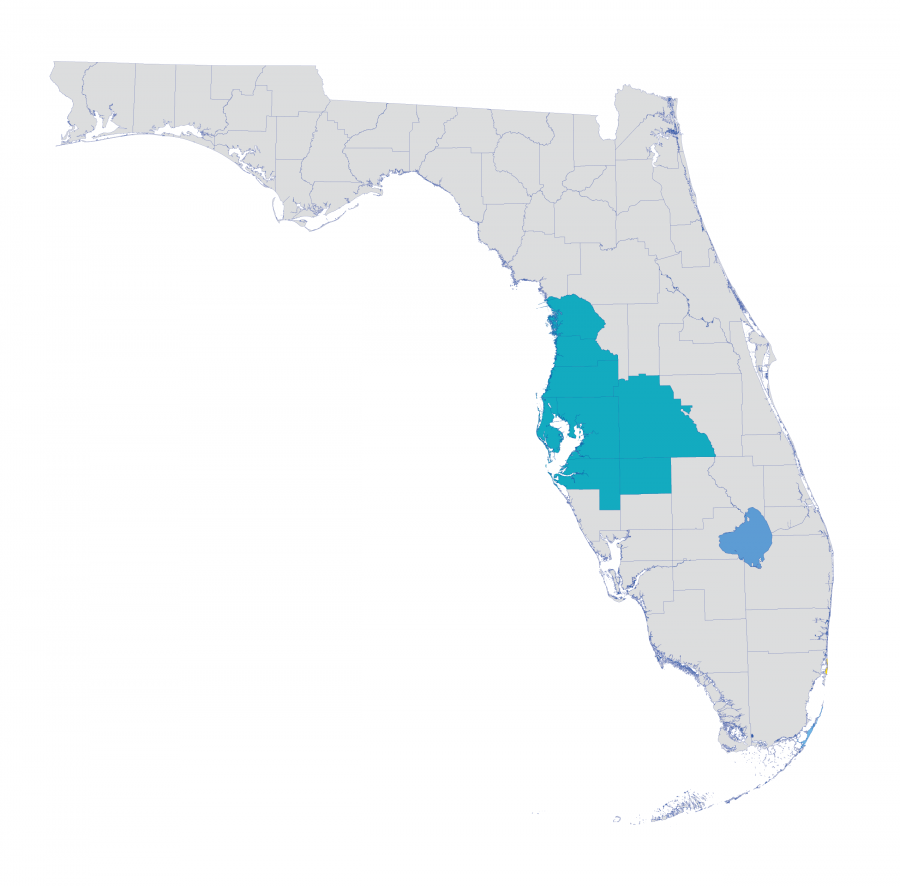
All solid waste facilities are
permitted by the Southwest District solid waste section in the following
Counties:
Citrus Pasco DeSoto
Pinellas
Hardee Polk Hernando
Sarasota
Hillsborough Sumter
Manatee
Marion (West of I-75 only)
As of July 1, 1998 the
Southwest District solid waste section regulates 142 solid waste facilities.
The following is a list of types of solid waste facilities permitted and
their respective Florida Statute:
Solid Waste Facility
Florida Statute
Class I Landfill 62-701
Class II Landfill 62-701
Class III Landfill 62-701
Construction & Demolition
Disposal Facility 62-701
Transfer Stations 62-701
Composting Facilities 62-709
Material Recycling Facility
62-701
Waste Tire Collection Centers
62-711
Waste Tire Processing
Facilities 62-711
MSW Resource Recovery
Facilities 62-702
Incinerators 62-702
All Closed Landfills closed
under a permit 62-701
The Department utilizes a
permit application tracking system (PA) to monitor the permit process.
COMPLIANCE/ENFORCEMENT SECTION
The compliance/enforcement
section is tasked with performing all compliance inspections in accordance
with the following Level of Service to assure that solid waste facilities
are operating in compliance with their permit and State regulations:
Facility Type Inspections/year
Class I Landfills 3
Class II Landfills 3
Class III Landfills 3
Closed Landfills 1
Construction/Demolition
Disposal Facilities 3
Transfer Stations 2
Composting Facilities 2
Material Recycling Facilities
3
Waste-to-Energy Plants 3
Waste Tire Collection Centers
2
Waste Tire Processing
Facilities 2
Resource Recovery Facilities
& Incinerators 3
A facility inspection may
result in a warning letter (WL) for violations identified during the
inspection. The Department requires a facility to address the minor
violations in a specified timeframe. Facility inspections resulting with
major violations or repetitive minor violations of the Department Rules and
permit conditions require the permittee to enter into a consent order (CO)
with the Department which may include specific time periods required to
bring the facility back into compliance. The consent order will have
penalties and/or costs associated with it. If the Department requires a
facility to resolve a major violation immediately a Notice of Violation
(NOV) will be issued. This document may also revoke a permit if the facility
has demonstrated lack of compliance with repetitive major violations.
In addition to our compliance,
enforcement and permitting activities technical assistance is provided to
the public, facility owners, consultants, and law enforcement officials. The
Department also regulates all activities on old closed landfills.