
The DEPost, The latest news from the Department of Environmental Protection
Volume 4, Issue 36 More Protection, Less Process

December 17, 2004

Colleen M. Castille
Message from Secretary Colleen M. Castille

As the Florida Legislature convened this week for a Special Session, much of the proposed legislation was devoted to restoring Florida’s storm-battered beaches and helping the thousands of residents affected by this year’s record-breaking hurricane season.

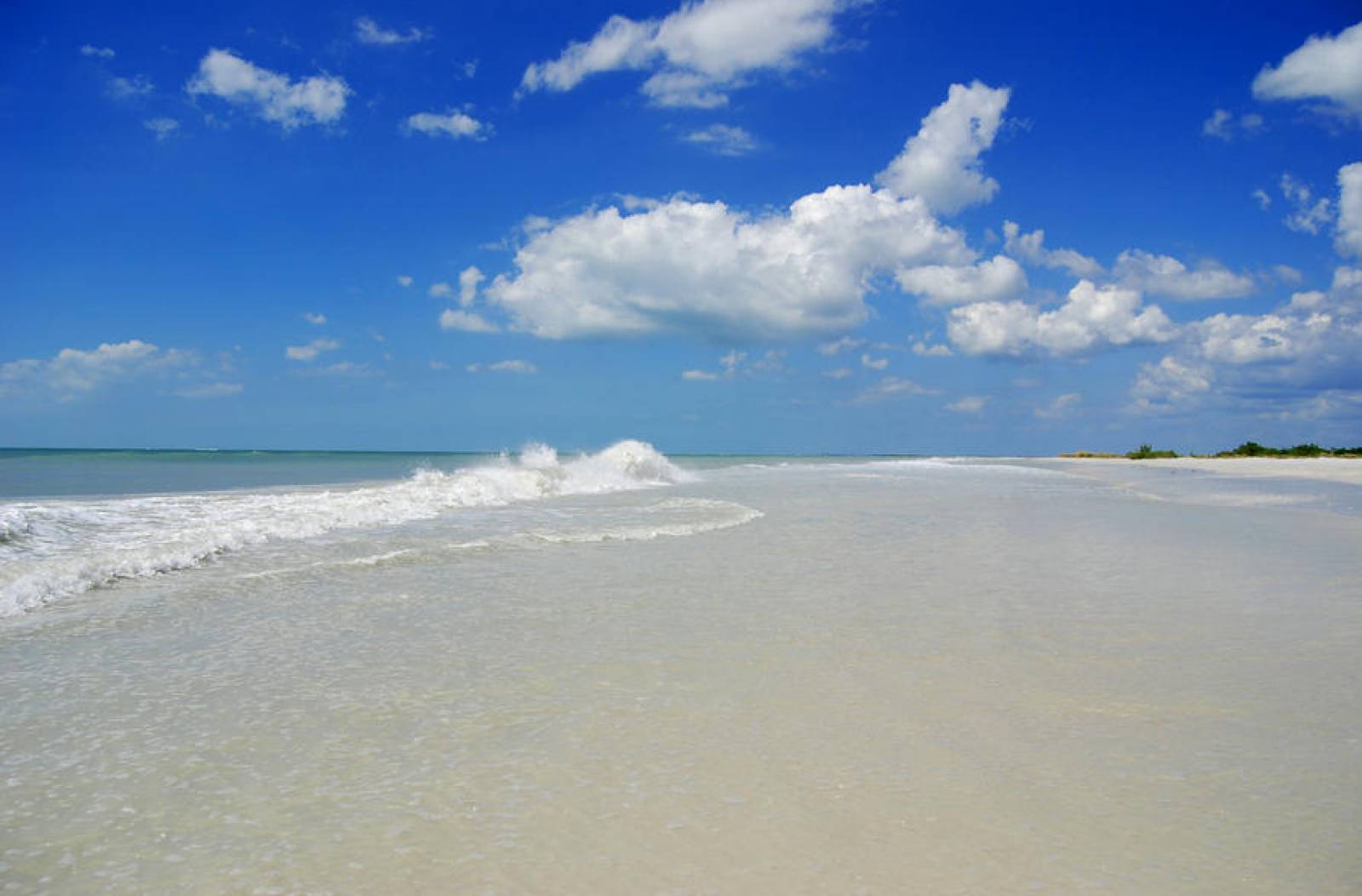
Most of Florida’s 1,350-mile coastline suffered at least some damage during the storms, leaving some beaches devastated. The Department recommended $68 million to fund a beach recovery plan, which includes 120 projects -- from the Florida Keys to the Gulf Coast -- to repair and rebuild beaches and dune systems, remove debris and monitor and assess restoration efforts.

While many beach systems recover naturally over time, destroyed dunes leave coastal habitats vulnerable to high winds and storm surges. The plan accelerates restoration, rebuilding the natural buffer that protects our coastal communities. Department engineers and environmental managers spent almost 1,000 hours assessing beach and dune erosion and documenting damage across 25 counties to prepare the recovery plan.

Across Florida, determined residents did not wait for a plan and immediately began storm recovery in their local communities. In Escambia County alone – which felt the brunt of Hurricane Ivan -- two hundred million tons of debris have already been removed, with some piles reaching three-quarters of a mile long and 70 feet high.

Millions of dollars provided by the State, FEMA and the U.S. Army Corps of Engineers will rebuild Florida’s famed beaches, sandy dunes and coastal communities -- sustaining our tourist-based economy, protecting our coastal communities and restoring Florida’s natural resources and coastal habitats.

Colleen M. Castille's signature

Florida Uses Cyberspace to Outline
Energy Future On-Line

TALLAHASSEE—Today, the Department unveiled a new digital home for the Florida Energy Office. The website outlines Florida’s ‘next generation’ energy initiatives in hydrogen, solar, clean transportation and biomass, and provides energy conservation tools for businesses, communities and residents.

“Florida is at the forefront of the clean energy revolution,” said Secretary Castille. “Developing pollution-free energy technology benefits Florida’s residents, natural resources and economy. This website will allow us to share valuable information about Florida’s energy future across the globe.”

Energy websiteThe new website provides government, businesses and organizations with information about 21st Century energy research, along with Florida’s initiatives to generate cleaner power and commercialize low-emission and alternative fuel vehicles. Florida is one of only a handful of states forging public-private partnerships to demonstrate hybrid-diesel technology and hydrogen-powered cars, trucks and buses.

“Florida is truly a front-runner in adopting clean energy technologies,” said Deputy Secretary for Regulatory Programs and Energy Allan Bedwell. “Along with cleaner vehicles, the State is expanding energy savings for Florida’s communities and laying the groundwork for the hydrogen highway.”

Leading by example, the State of Florida currently owns more than 900 alternative fuel vehicles. Including biodiesel trucks, DEP alone owns 300 alternative fuel vehicles and 50 fuel-efficient hybrid vehicles, comprising 22 percent of its fleet. Last year, the nation saw a 25 percent increase in registrations for hybrid vehicles -- Florida ranked third among the states.

Florida is also harnessing the power of the sun to expand the benefits of emission-free solar energy to schools and communities. Over the last year, DEP began installing solar electric units in Florida’s public schools through SunSmart Schools, outfitting weatherized low-income homes with solar water heaters through Front Porch Sunshine, and most recently launched the SunBuilt program, which provides home builders with financial incentives for placing solar hot water heaters in newly constructed homes.

For more information, visit www.FloridaEnergy.org.

Florida Hosts Hydrogen Energy Workshop
for Southern States

ORLANDO – On Wednesday, December 14, DEP and the US Department of Energy hosted the Southeast Regional Hydrogen Workshop to unite more than 150 federal, state and local officials and further America’s hydrogen economy. Addressing the basics of hydrogen energy, President Bush’s Hydrogen Fuel Initiative and current hydrogen projects in the Southeast, the workshop gave participants a hands-on experience with cutting-edge energy technology.

“Florida is at the forefront of the hydrogen energy revolution,” said DEP Deputy Secretary for Regulatory Programs and Energy Allan Bedwell. “This commitment to developing pollution-free energy technology benefits Florida’s natural resources, quality of life and economy.”

Florida is recruiting hydrogen technology companies by providing risk capital for select projects and offering a non-regulatory environment for hydrogen demonstration projects. Designated a “Qualified Target Industry” by Enterprise Florida, the State is providing tax incentives for companies that create high wage jobs in the hydrogen industry.

This year, DEP gathered executives from the world’s leading companies and Florida state government officials to create the Florida Hydrogen Business Partnership, a collaborative effort to develop a private-public strategy for the rapid commercialization of hydrogen energy technologies in Florida.

“More than $1.5 billion is invested in hydrogen technology each year,” said Deputy Secretary Bedwell. “Florida’s leadership in developing hydrogen technology will protect the environment and bring new investment, companies and jobs to the state.”

Ford Focus Fuel Cell VehicleIn May, Ford Motor Company and BP America selected the Sunshine State as one of three sites nationwide to demonstrate hydrogen fuel cell cars and hydrogen fueling stations. Through the federal government’s Controlled Hydrogen Fleet and Infrastructure Demonstration and Validation Project, Ford is supplying Florida’s Department of Environmental Protection and Progress Energy each with five hydrogen-powered Ford Focus Fuel Cell Vehicles.

Last Spring, North Port High School became the first school in the nation to teach students about emerging hydrogen technology using an on-site hydrogen fuel cell together with a hydrogen science curriculum. The U.S. Department of Energy designated North Port as one of only 10 Hydrogen Education sites nationwide, supplying the school with a hydrogen curriculum complete with laboratory experiments. To further hands-on learning, the Department partnered with Florida Power and Light and Sarasota County to install a hydrogen fuel cell at the school.

For more information, visit www.Floridaenergyoffice.com.

DEP Announces New Appointments for Regulatory Programs

TALLAHASSEE – Secretary Colleen Castille and Deputy Secretary for Regulatory Programs and Energy, Allan Bedwell, named Mary Jean Yon as Director of the Division of Waste Management. At the same time, Dick Fancher was tapped to take over as Director of DEP’s Northwest Regulatory District.

“It is a pleasure to continue working with such talented individuals dedicated to protecting public health and Florida’s environment,” said Secretary Castille. “With nearly 50 years of combined experience in environmental management, Mary Jean and Dick will continue to provide the Department with strong leadership.”

Beginning her career with DEP in 1979, Yon worked in a variety of waste management programs, eventually heading the agency’s solid waste program. She assumed her most recent position as DEP’s Northwest District Director in 2001, four years after receiving DEP’s award for Employee of the Year.

“Mary Jean’s firm commitment has achieved superior environmental protection in the Northwest,” said Deputy Secretary Bedwell. “Her progressive style will help DEP effectively manage future opportunities and overcome challenges to ensure long-term protection for Florida’s natural resources.”

Yon’s long history of environmental leadership includes two years with the U.S. Environmental Protection Agency and cooperative partnerships with organizations such as the Solid Waste Association of North America, Florida Association of Counties, League of Cities and the Florida Local Environmental Resource Agencies. She holds a Masters Degree in Land Use Planning from Florida State University.

Yon leaves the Northwest District in the hands of her former Assistant Director, Dick Fancher. A 30-year veteran of environmental protection, Fancher began his career in 1974 with DEP’s predecessor agency, the Department of Pollution Control. He spent a decade regulating wetland activities in Northwest Florida and managed the wetlands and stormwater programs in the early 1980s.

“Dick has fostered a legacy of successful environmental regulation and restoration. His hard work and dedication have prepared him to lead the Northwest District toward continued success,” said Deputy Secretary Bedwell. “Dick is a natural successor to Mary Jean. His experience will ensure a smooth transition and continued environmental protection in the region.”

During his tenure, Fancher helped initiate habitat restoration activities, including Project GreenShores -- a 15-acre, $1 million community-based estuarine habitat restoration project. His team was awarded the 2003 Coastal America Partnership Award and the 2004 Gulf Guardian Award for partnerships dedicated to environmental stewardship.

From Hurricane Eloise in 1975 to Ivan this past year, Fancher has unprecedented experience in emergency permitting, response and recovery. A dedicated member of the community, Fancher is an active mentor and leader in the District’s Youth Motivator and Angel Tree Program and has volunteered for a community camping organization for 15 years. He holds two Master’s degrees from Syracuse University and Regent University in Education and Management respectively.

Yon and Fancher assume their new roles on January 18, 2005.

Florida State Parks Director Receives Southeast Appointment

Mike BullockFT. GEORGE ISLAND – Florida State Parks Director Mike Bullock was named vice-president of the Southeast State Park Directors Association this week. The regional association elected Bullock during their annual meeting at Northeast Florida’s Ft. George Island State Park.

“Mike’s appointment reflects his hard work and dedication to Florida’s award-winning state park system,” said Secretary Castille. “The diversity of natural resources and recreational opportunities within the nation’s southeastern state parks will benefit from his strong and visionary leadership.”

A 32-year veteran of Florida’s state park system, Bullock began his career in 1972 as a planning manager. During his tenure, he served as Assistant Director for the Florida Park Service before being appointed Director in 2003.

Now in its 62nd year, the Southeast State Park Directors Association represents state parks in 13 states from Virginia to Florida. The collaborative work of the Association is placing southeast state parks among the most effectively managed and progressive park systems in the country.

Florida’s state park system is one of the largest in the country with 158 parks covering more than 700,000 acres. Over the last five years, Florida added eight new parks, more than 203,000 acres and increased attendance at its nationally-renowned park system by five million visitors. In 1999, the Florida state park system was awarded the National Gold Medal for Excellence as the nation’s best park system.

For more information, visit www.floridastateparks.org.

DEP Law Enforcement Secures $140,000 for Homeland Security

ORLANDO – The Department received $140,000 from the Homeland Security Funding Committee this week to advance Florida’s domestic security strategy. Funds will go toward equipment needs for the State Environmental Response Team and the team’s annual planning session.

“The State Environmental Response Team is charged with safeguarding Florida’s citizens from biological and chemical threats,” said DEP Division of Law Enforcement Director Tom TramelI. “This funding enables us to purchase additional equipment to augment the team’s response capability and allow for the more timely identification of potentially harmful weapons, including industrial chemicals.”

vapor analyzerFormed in 2001, the Emergency Response Team is a unique, highly specialized group with the capability to conduct criminal and forensic investigations in a chemical and biological atmosphere. Equipment purchases targeted for this year include a portable hazardous materials chemical identifier, a field chemical agent detector and a portable toxic vapor analyzer.

Conceived and led by DEP’s Division of Law Enforcement, the multi-agency team is comprised of representatives from the Departments of Health, Agriculture and Consumer Services, Transportation, Law Enforcement and Financial Services, along with the Florida Fish and Wildlife Conservation Commission, Florida Highway Patrol and the U.S. Environmental Protection Agency.

Florida Meeting Clean Air Standards for Fine Particles

TALLAHASSEE — The U.S. Environmental Protection Agency (EPA) today confirmed that Florida is meeting new, more stringent federal clean air standards for fine particle pollution (PM2.5). Florida is one of just three states east of the Mississippi River meeting all national standards for clean air.

“Achieving another milestone in clean air demonstrates a continued commitment to Florida’s natural resources and quality of life,” said Governor Jeb Bush. “Reducing emissions and adopting cleaner energy technology is an investment in public health and will ensure a stronger, healthier environment and economy.”

In a letter to Governor Bush today, EPA Administrator Michael O. Leavitt stated, “all areas in your state meet the standards for fine particles. Your state should be proud of its progress toward cleaner air and meeting the fine particle standards. The challenge now is to not only sustain, but also continue the progress your state has made towards clean air.”

kite in blue skyFine particles include dust, smoke, soot and liquid droplets too small to be seen except through a microscope. While some particles, like smoke, are released directly into the air, others are formed from chemical reactions between gases emitted by vehicles, power plants and industrial facilities.

The EPA’s new fine particle standard limits levels to 65 micrograms per cubic meter over 24 hours and just 15 micrograms per cubic meter over a year. Based on air quality measurements over the last three years, Florida is meeting both the 24-hour and annual standard for particle pollution, and is one of only 30 states meeting the health-based standard.

“Florida is making investments today to ensure continued attainment of protective air quality standards for ozone and fine particles,” said Secretary Castille. “By using state-of-the-art, cost-effective technologies, we can keep our economy moving while reducing pollution, protecting public health and restoring the environment.”

Particle pollution can contribute to unnaturally hazy skies, acid rain and health problems. EPA estimates that meeting the PM2.5 standard prevents more than 15,000 premature deaths, 75,000 cases of chronic bronchitis and 10,000 hospital admissions for respiratory and cardiovascular diseases nationwide.

Over the last five years, the State of Florida has successfully prompted the modernization of older power plants to achieve large reductions in emissions of soot, sulfur dioxide and smog-contributing nitrogen oxides. Florida is also developing low emission hydrogen and solar energy technologies, which have the potential to be pollution-free power sources for neighborhoods, vehicles and buildings.

This month marks the 34th anniversary of the Clean Air Act. For more information on Florida’s air, visit http://www.dep.state.fl.us/Air/flaqs.htm. For more information on EPA’s particle pollution designations, visit http://www.epa.gov/pmdesignations/.

Celebrate this Holiday Season with Environmental Spirit

TALLAHASSEE- During December, Floridians produce more waste than any other month of the year and more than five million tons of garbage is generated throughout the nation. Reducing, reusing and recycling can prevent pollution and protect the environment. This holiday season, DEP is encouraging residents to conserve natural resources by recycling and reusing holiday gifts and decorations.

To recycle the more than 33 million trees harvested each year for Christmas, many communities offer tree collections during the first two weeks of the year. Trees may be chipped into mulch for gardens, parks, hiking trails, playground areas and landscaping.

Gift bag, paper and bowPackaging materials make up almost one-third of the waste generated in the United States. To reduce waste this holiday season, consider reusing old gift bags, wrapping gifts in newspaper, or eliminating wrapping all together. Reusing gift wrapping, ribbons and packaging significantly reduces waste and saves consumers money.

This year the U.S. Postal Service will handle more than 20 billion pieces of holiday mail, including holiday cards and packaged gifts. Both cards and packaging can be recycled. Most recycling collection points accept used cardboard. Foam packing peanuts can be recycled at many postal shipping stores.

In the age of technology, electronic gadgets are at the top of the gift list. This season, consider purchasing rechargeable batteries to power new electronics for years to come. Used disposable batteries can be recycled at most collection points. Whether a cell phone, stereo, television or compact disc player, local charities can put second-hand electronics to good use. Charities also accept holiday cards for craft projects.

 Visit www.earth911.com or call 1-800-CLEANUP to find the recycling location nearest you.

Calendar
January National Volunteer Blood Donor Month
January National Mentoring Month
January 13 Water Reuse Seminar [pdf]
February 15-17 Annual Solid Waste Workshop

 Governor Jeb Bush
Secretary Colleen M. Castille

Questions/Comments | Previous Editions

DEP home page