
|
TALLAHASSEE – The Florida Department of Environmental Protection (DEP)
is celebrating Hispanic Heritage Month, September 15 – October 15, by paying
tribute to the many Hispanic historical and cultural resources preserved at
Florida’s 160 state parks. Twelve of Florida’s state parks preserve Hispanic
heritage, highlighting important anniversaries of historic moments, explorations
and settlements throughout the state of Florida.
“A strong Hispanic heritage is felt throughout Florida and each year we enjoy
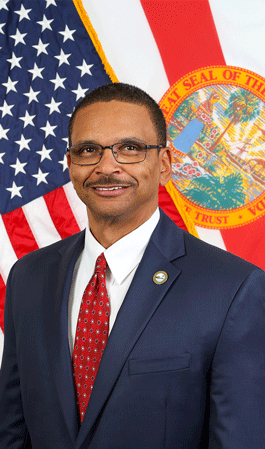
celebrating the contribution to our state’s history,” said Florida State Parks
Director, Donald Forgione. “We encourage residents to come out to a state park
and explore the rich Hispanic history that is woven through our state.”
The following Florida State Parks offer a window into Florida’s Hispanic
heritage:
-
Anastasia State Park, St. Augustine
More than 300 years ago, sites like the coquina quarries located within
Anastasia State Park were busy with workers hauling blocks of rock. With
hand tools, they hewed out blocks of the soft shellstone and pried the
squares loose along natural layers in the rock. The blocks were used to
construct the Castillo de San Marcos and many other buildings.
- San Pedro
Underwater Archaeology Preserve, Islamorada
The San Pedro was a 287-ton, Dutch-built ship which sailed as part of the
fleet of New Spain in 1733. Her discovery in Hawk Channel in the 1960s, beneath
18 feet of water, led to the recovery of small silver coins dated between 1731
and 1733, as well as cannons trapped under the ballast pile. Today, this
underwater archaeological preserve features a submerged shipwreck that is
available for diving and snorkeling.
- Mound Key
Archaeological State Park, Estero
This 125-acre island is located in the Estero Bay, and was created more than
2,000 years ago by the indigenous tribe known as the Calusa, or “fierce people.”
In 1566, the Spanish Governor of Florida established a settlement on Mound Key
with a fort and the first Jesuit mission, known as San Antonio de Carlos. Today,
interpretive displays can be found along a trail that spans the width of the
island.
- DeLeon
Springs State Park, DeLeon Springs
Legend and folklore claim Juan Ponce de León sought and discovered the
mythical Fountain of Youth at DeLeon Springs. The Visitor Center features
exhibits on the park's 6,000 year history and presentations on Florida's
Springs, the St. Johns River and the Everglades.
- Tomoka State
Park, Ormond Beach
Within the park is the Nocoroco Site, a Timucuan village reported by Spanish
explorers in the early 1600s, where visitors can enjoy a half-mile nature trail
through a hardwood hammock that was once an indigo field for an 18th century
British landowner.
-
Sebastian Inlet State Park’s McLarty Treasure Museum, Melbourne Beach
In 1715, 11 Spanish treasure galleons sank along the east central Florida
coast. One of the survivors’ campsites was located on the present day site of
the McLarty Treasure Museum. A second museum, the Sebastian Fishing Museum also
provides history of the area to visitors.
- Big
Talbot Island State Park, Jacksonville
Named during the British period and originally used by the British grantees
for plantation agriculture, including citrus, sugar, indigo and cotton, Big
Talbot Island was used by Spanish settlers during the following Second Spanish
period.
- Fort Mosé
Historic State Park, St. Augustine
I In 1738, the Spanish governor of Florida chartered Fort Mose as a
settlement for freed Africans who had fled slavery in the British Carolinas.
When Spain ceded Florida to Britain in 1763, the inhabitants of Fort Mose
migrated to Cuba. Although nothing remains of the fort, the site was listed on
the National Register of Historic Places in 1994 for its importance in American
history.
- San Marcos
de Apalache Historic State Park, St. Marks
The site’s history began in 1528 when Panfilo de Narvaez arrived with 300
men. In 1539, Hernando de Soto, along with 600 men, followed the same route
taken by Narvaez. In 1679, the Spanish built a fort to protect the Spanish
missions. The museum at the park displays pottery and tools that were unearthed
near the original fort and explains the history of the site.
- San
Felasco Hammock State Preserve, Alachua
S San Felasco is the mispronunciation by settlers and Indians of the name of
a 17th century Spanish mission, San Francisco de Potano, which was located in
the southeastern section of the preserve. The preserve is one of the few
remaining mature forests in Florida.
- Paynes
Prairie Preserve State Park, Micanopy
R Rancho de La Chua, on the Prairie's north rim, is believed to be the site
of Hacienda de La Chua, the largest cattle ranch in Spanish Florida. Established
before 1637, La Chua was managed by the politically powerful Menendez Marquez
family. Cattle and wild horses seen today are descendants of those brought over
by the Spanish in the early 1500s and left to roam free after the British raids
in the early 1600s.
- Fort
Zachary Taylor Historic State Park, Key West
Fort Taylor played important role in Civil War and the Spanish-American War.
The fort was one of a series built in the mid 1800s to defend the nation’s
southernmost coastline. It was designated a National Historic Landmark in 1973.
973.
Special Events commemorating Hispanic heritage month include:
- Fort Clinch State Park
Spanish American War Event
Saturday, September 18, 9:00 a.m. - 5:00 p.m.
Sunday, September 19, 9:00 a.m. – 1:00p.m.
This event will feature a commemoration of the Spanish-American War.
Fees include regular park entrance plus $2.00 per person Fort admission. For
more information, call (904) 277-7274.
- Fort Mosé Historic State Park
St. Augustine Spanish Garrison
September 25, 10:00 a.m. - 2:00 p.m.
This event will offer living history demonstrations on the last Saturday of
every month. Volunteers from the St. Augustine Spanish Garrison will be onsite
in period dress offering visitors a fascinating glimpse into the past. This
program is weather permitting. Regular park entrance fees apply.
To learn more about Hispanic heritage in Florida, visit
VivaFlorida.org. To follow Florida's
state parks on Twitter, visit
www.twitter.com/FLStateParksteParks. For more information about Florida's
state parks, visit
www.floridastateparks.org.
|

"A strong Hispanic heritage is felt
throughout Florida and each year we enjoy celebrating
the contribution to our state’s history."
Donald Forgione
Florida State Parks Director
|