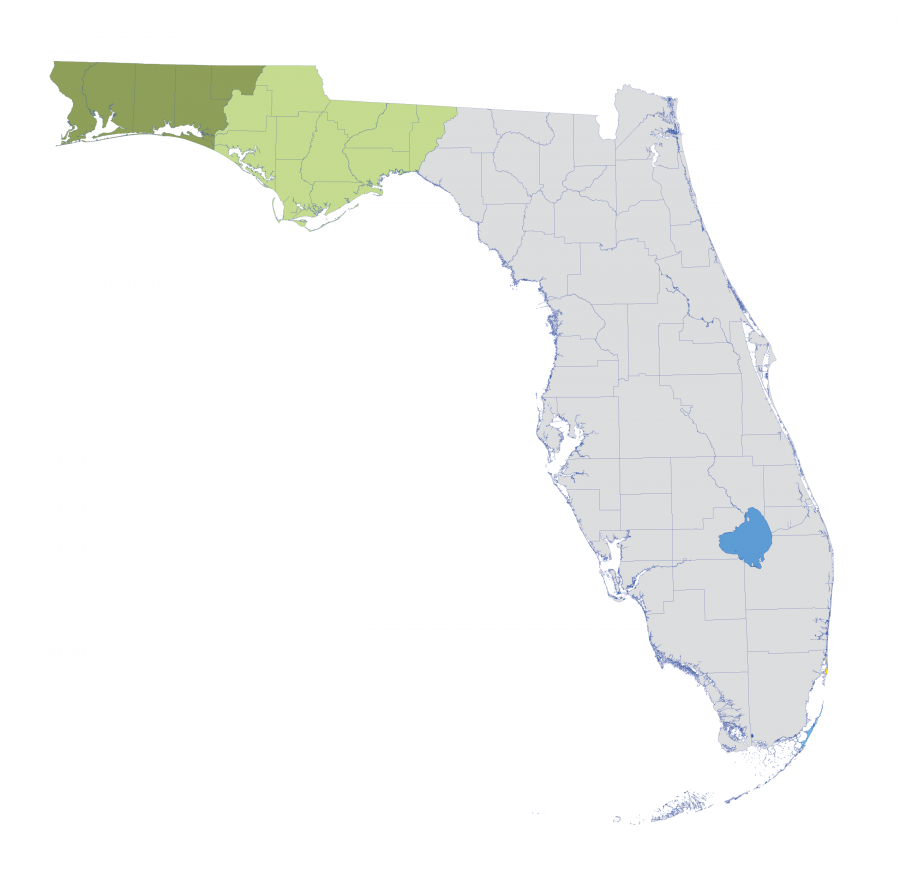
The Northwest District, headquartered in Pensacola with branch offices in Tallahassee and Panama City, provides environmental permitting assistance, emergency response and environmental education outreach in 16 counties in the Florida Panhandle.
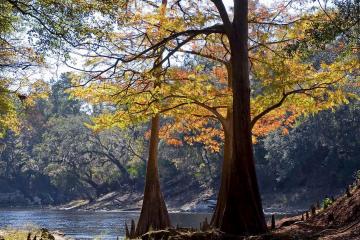
Famous for its stunning sugar-white beaches and beautiful emerald waters, Florida’s Panhandle attracts visitors from all over the world. The region is home to many freshwater and saltwater fishing spots as well as the source of the famed Apalachicola Bay oysters. Northwest Florida’s diverse landscape is also filled with natural springs, unique hardwood forests and fresh water rivers.
Jurisdiction: Bay, Calhoun, Escambia, Franklin, Gadsden, Gulf, Holmes, Jackson, Jefferson, Leon, Liberty, Okaloosa, Santa Rosa, Wakulla, Walton and Washington counties.
Elizabeth Mullins Orr, Director, Northwest District
As director of the department’s Northwest District, Elizabeth is responsible for environmental permitting, compliance, emergency response, environmental education for DEP’s regulatory programs within the 16 counties of the Florida Panhandle.
Prior to being promoted to district director, Elizabeth served as the district’s assistant director for five years, and was responsible for overseeing the district's Compliance Assurance program. She also previously served as program administrator for the district’s Permitting program.
Elizabeth was born and raised in South Carolina and has Bachelor’s Degrees Biology and Anthropology and a Masters Degree in Environmental Studies from the College of Charleston
IMPORTANT UPDATE - Please note: The Panama City Branch Office has relocated to 2420 Jenks Ave., Suite 4-B, Panama City, FL 32405.
Compliance is a priority for DEP because it is key to protecting public health and the environment. DEP takes a proactive approach to protecting Florida’s environment through education and outreach.
The Northwest Regulatory District is one of six districts that provide a regional presence for the department’s regulatory divisions. We proudly serve 16 counties in the Florida Panhandle.

Florida’s environmental laws require sites to be developed, projects to be built, and facilities to be operated in a manner that is protective of the environment.
Learn more about public records, media relations, outreach and the Office of the Ombudsman and Public Services.
None available at this time.
Interested in subscribing to DEP newsletters or receiving DEP updates through email?
Sign UpThe Florida Department of Environmental Protection is the state’s lead agency for environmental management and stewardship – protecting our air, water and land. The vision of the Florida Department of Environmental Protection is to create strong community partnerships, safeguard Florida’s natural resources and enhance its ecosystems.
Learn More