
***If there is a risk of physical harm, please call your local law enforcement agency***
The Florida Department of Environmental Protection does not inspect possible sinkholes.
Many common questions involving sinkholes are answered by DEP's Sinkholes FAQ. Should you have additional questions, you may call the FGS Sinkhole Helpline at 850-245-2118. NOTE: This is a helpline provided to clarify the information presented in the FAQs; answer any additional sinkhole questions; and provide verbal guidance relating to a sinkhole situation.
For insurance questions, please contact the Florida Department of Financial Services Division of Consumer Services.
For information about your rights as a renter or a landlord, review The Florida Bar's Consumer Pamphlet.
For an assessment, please contact a certified home inspector or foundation specialist in your area.
Media callers: Please contact the DEP Press Office at 850-245-2118.
Sinkholes are a common feature of Florida's landscape. They are only one of many kinds of karst landforms, which include caves, disappearing streams, springs and underground drainage systems, all of which occur in Florida. Karst is a generic term that refers to the characteristic terrain produced by erosional processes associated with the chemical weathering and dissolution of limestone or dolomite, the two most common carbonate rocks in Florida. Dissolution of carbonate rocks begins when they are exposed to acidic water. Most rainwater is slightly acidic and usually becomes more acidic as it moves through decaying plant debris.
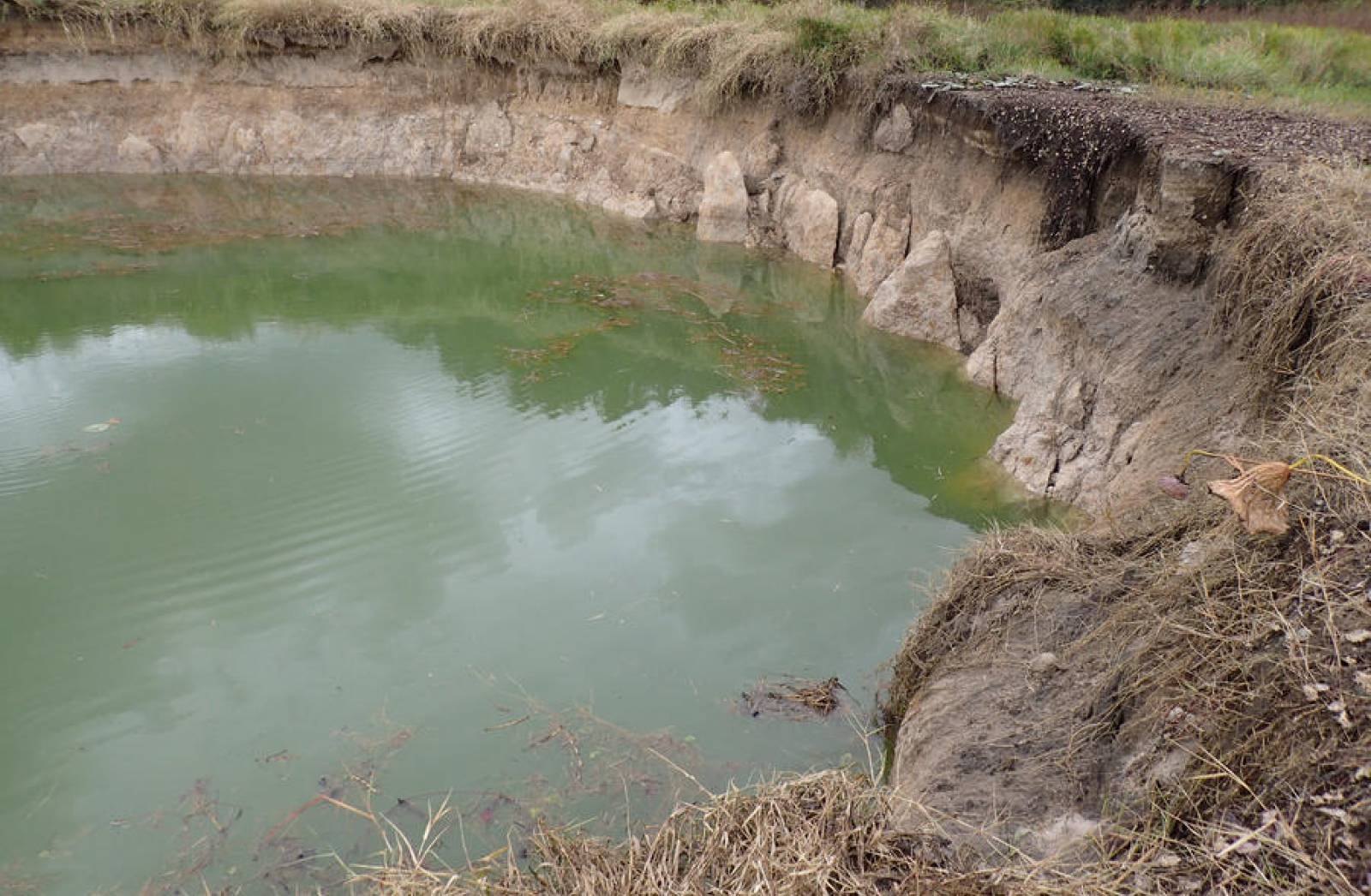
Limestones in Florida are porous, allowing the acidic water to percolate through their strata, dissolving some limestone and carrying it away in solution. Over eons of time, this persistent erosional process has created extensive underground voids and drainage systems in much of the carbonate rocks throughout the state. Collapse of overlying sediments into the underground cavities produces sinkholes.
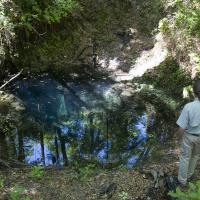
When groundwater discharges from an underground drainage system, it is a spring, such as Wakulla Springs, Silver Springs or Rainbow Springs. Sinkholes can occur in the beds of streams, sometimes taking all of the stream's flow, creating a disappearing stream. Dry caves are parts of karst drainage systems that are above the water table, such as the Florida Caverns in Marianna.
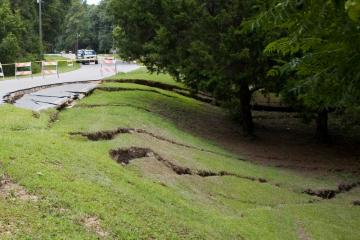
Other subterranean events can cause holes, depressions or subsidence of the land surface that may mimic sinkhole activity. These include subsurface expansive clay or organic layers that compress as water is removed; collapsed or broken sewer and drain pipes; broken septic tanks; improperly compacted soil after excavation work; and buried trash, logs and other debris. Often a depression is not verified by a licensed professional geologist or engineer to be a true sinkhole, and the cause of subsidence is not known. Such events are called subsidence incidents.
Interested in subscribing to DEP newsletters or receiving DEP updates through email?
Sign UpThe Florida Department of Environmental Protection is the state’s lead agency for environmental management and stewardship – protecting our air, water and land. The vision of the Florida Department of Environmental Protection is to create strong community partnerships, safeguard Florida’s natural resources and enhance its ecosystems.
Learn More