|
Laura Herren - Laura.Herren@dep.state.fl.us
3300 Lewis Street
Fort Pierce, FL 34981
phone: (772) 429-2995
fax: (772) 429-2999
Office Hours: 8:00am to 5:00pm
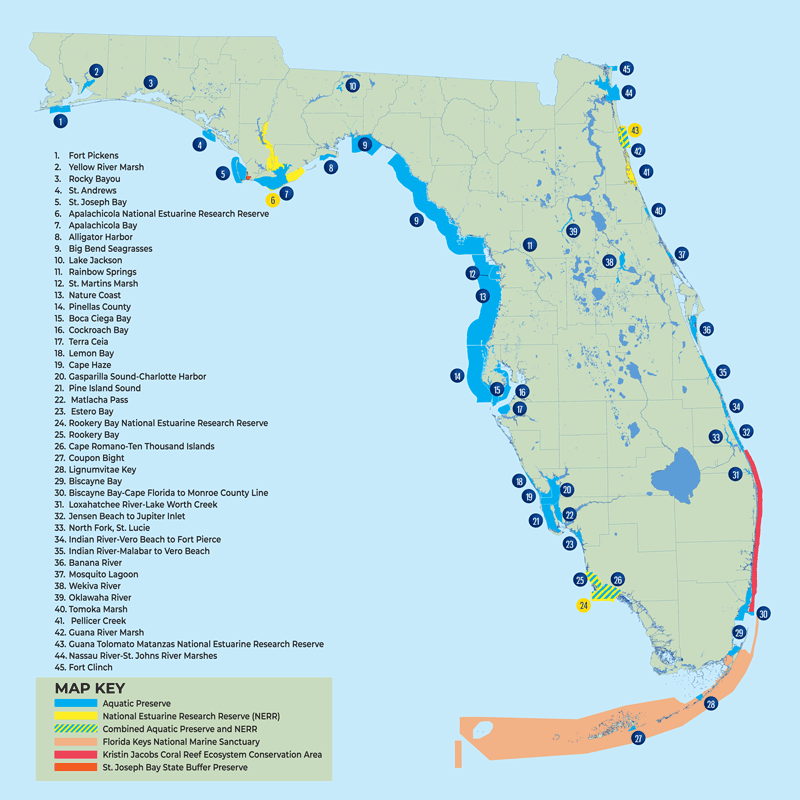
The Indian River - Vero Beach to Ft. Pierce Aquatic Preserve and Jensen Beach to Jupiter
Inlet Aquatic Preserve are part of southeast Florida’s Indian River Lagoon (IRL). The
Indian River Lagoon is an extensive ecosystem spanning two biogeographic zones
characterized by diverse land and water body formations. It possesses wide shallow lagoons
and narrow tidal creeks. The lagoon is bordered mostly by intertidal mangrove fringes and
salt marshes that are periodically sectioned by man-made mosquito impoundments and
residential development. Much of its open waters are dotted by oyster bars, clam beds and
spoil islands. The submerged lands are a mosaic of seagrass and algae beds, bare sandy
areas, and deep water sites. All of these features combine to create the most diverse
(species-rich) and productive estuary in North America.
Recreational uses include fishing, boating, and swimming. Agriculture and residential
communities use connecting canals for drainage. Mangroves, leatherfern, sawgrass, tidal
marsh and floodplain forest make up the primary plant communities along the riverfront.
The aquatic preserve contains fishes, turtles, birds, alligators, and manatees. The
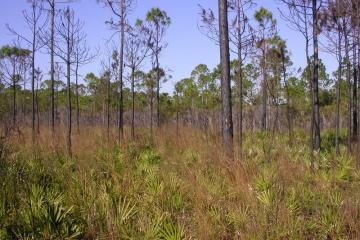
adjacent Savannas Preserve State Park contains various natural communities such as pine
flatwoods and scrub.
Both the Indian River - Vero Beach to Fort Pierce Aquatic Preserve and Jensen Beach to
Jupiter Inlet Buffer Preserve were adopted under Florida Statutes, Sections 258.35 – 258.46
by the State of Florida on October 21, 1969 and are managed by the Florida Department of
Environmental Protection, Office of Coastal and Aquatic Managed Areas. They are listed in
the Aquatic Preserve Rule, Chapter 18-20 Florida Administrative Code.
The Vero Beach to Fort Pierce Aquatic Preserve extends from the southern Vero Beach
corporate limit (Indian River County) to the north A1A bridge at Fort Pierce (St. Lucie
County).
The Jensen Beach to Jupiter Inlet Aquatic Preserve extends from the southern corporate
limits of Fort Pierce (St. Lucie County) south (thru Martin County) to Jupiter Inlet
(West Palm Beach County), including the Peck Lake and Hobe Sound areas. It has lagoon
habitat contained between mainland (with US Highway 1) and a barrier island (with A1A).
The Vero Beach to Fort Pierce Aquatic Preserve is 12 miles long and encompasses approximately
11,000 acres of surface water area.
The Jensen Beach to Jupiter Inlet Aquatic Preserve is 37 miles long and encompasses
approximately 22,000 acres of surface water area.
The watershed for most of the lagoon has been modified by agricultural drainage and
residential development. Alterations include the construction of major drainage networks
that allow larger amounts of fresh water to flow into the lagoon more quickly than natural
drainage patterns would have allowed. Major freshwater inputs include Taylor Creek and the
North and South forks of the St. Lucie River. The preserves receive runoff from a drainage
basin of approximately 3473 sq. km.
The IRL aquatic preserves contain many important habitats. Seagrass beds, mangroves, drift
algae, salt marshes, oyster bars, tidal flats, and spoil islands provide food, shelter and
space for the numerous plants and animals found within them.
Seagrasses are submerged vascular plants that
perform many valuable functions within the estuary. They stabilize and recycle nutrients,
entrap silt, and provide shelter and substrate for animals and other plant forms. They also
function as nursery areas for fishes, food for the endangered West Indian manatee, and
substrate for epiphytic algae. These algae are eaten by invertebrates, which are in turn
eaten by fish.
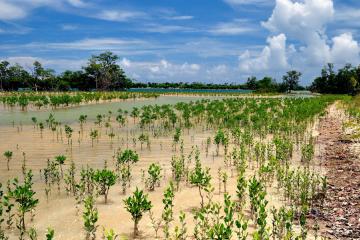
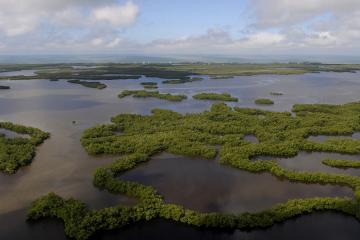
Mangroves perform a variety of ecological
roles. The entire plant is important. Their roots stabilize the shoreline and limit erosion.
Their leaves contribute an important leaf component (detritus) in the nutrient cycle and
their canopies function as bird rookeries.
There are over 60 species of red, brown, and green algae that grow in the sediment, attached
to seawalls or rip-rap, or attached to seagrasses. Some of these algal species can begin as
attached forms that eventually break off to form drifting algal mats that become substrata
for numerous invertebrates, associated algae, and fish. The drift algae communities may
provide even better refuge for many organisms than do seagrasses.
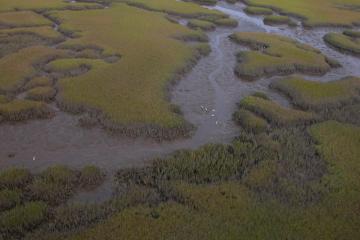
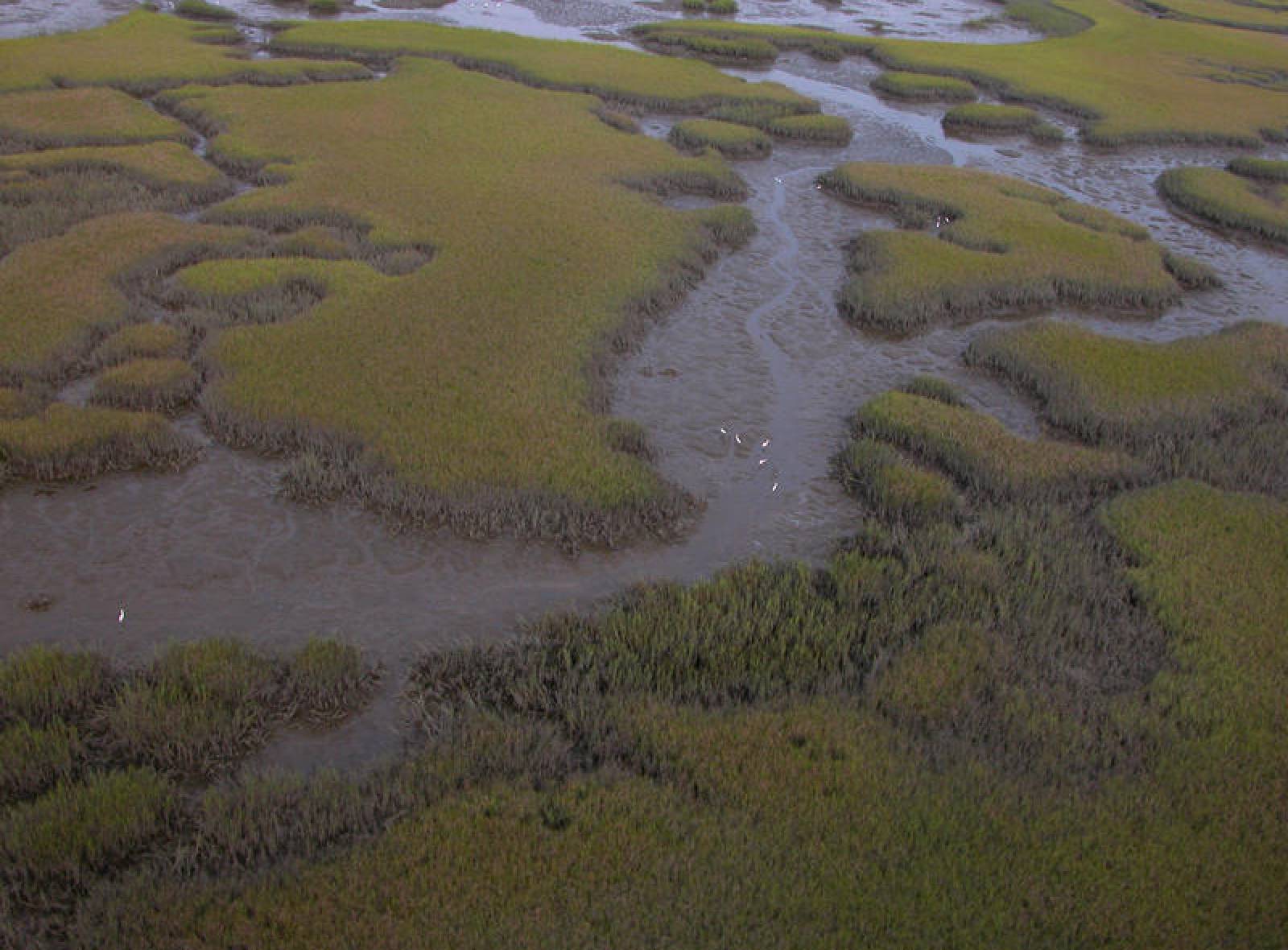
Marshes are located mainly in the Jensen
Beach to Jupiter Inlet Aquatic Preserve. The term "marsh" covers a variety of
habitats, the species composition of which is largely determined by small differences in
elevation. Two major categories of marsh are high marsh and low marsh. High marshes
represent areas that receive the least amount of tidal inundation and are characterized by
salt grass, sea purslane, sea daisy, saltwort, glasswort, and black and white mangroves. Low
marshes are more frequently inundated, and the dominant vegetation is smooth cordgrass or
red mangrove. Marsh communities recycle nutrients, contribute to estuarine productivity,
function as a natural filtration system for runoff, and provide habitat for a variety of
animal life.
Oyster bars create habitat space that is unique to the lagoon. The substrate formed by the
oyster colonies occurs in areas where there are no other hard substrates. Oyster bars perform
a valuable function in the food web by converting plankton, detritus, and possibly dissolved
organics into animal protein. The oysters and associated animals are utilized by other
animals which feed on or around the oyster bars.
Tidal flats describe a wide variety of shallow habitats. They may consist of lagoonal
beaches, areas waterward of mangroves, spoil areas, and natural shoals. These tidal areas
are utilized by a variety of shore birds which feed on the numerous invertebrate species
inhabiting the flats. Such birds often form extensive nesting colonies in adjacent upland
areas. Successful breeding may be linked to both the vitality of the flats and to their
undisturbed access. In addition to using the flats as feeding sites, many birds use them
as resting or "loafing" areas.
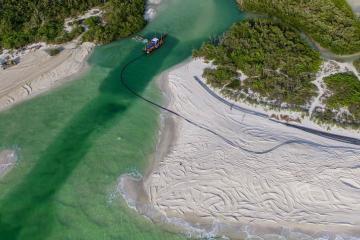
The construction and maintenance of the Intracoastal Waterway channel and barrier island
inlets resulted in the formation of a chain of spoil islands within the Indian River
Lagoon. These islands, formed by the deposition of the dredged material (spoil), usually
parallel the channel alignment. These islands are generally dominated by exotic vegetation,
such as Australian pine and brazilian pepper. However, the shoreline fringe is generally
vegetated with mangroves and other native wetland vegetation, and provides valuable habitat
to fish and wildlife, especially bird life.
Seagrasses are one of the most important organisms found in the aquatic preserves. There
are six species of seagrass located within the preserves. Manatee grass (Syringodium
filiforme), shoal grass (Halodule wrightii), and turtle grass (Thalassia
testudinum) are most prevalent. The rare Johnson’s (Halophila johnsonii), star
(Halophila englemanni), and paddle (Halophila decipiens) grasses are also
sparsely distributed within the lagoon. These seagrasses support a large number of
commercial, recreational, and ecologically important species. They do this by providing
food, shelter, and living space for a majority of the organisms in the food chain. It is
estimated that the lagoon generates $750,000 annually in tourism.
The lagoon contains over 400 species of fishes, 260 species of mollusks, and 479 species
of shrimps and crabs. Commercially important species include gamefish (such as snook,
seatrout, and tarpon) and crabs. The lagoon habitats serve as nursery ground for virtually
all aquatic species found within the lagoon and offshore on the continental shelf. Hundreds
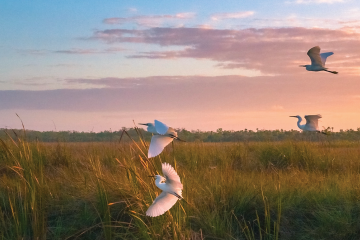
of species of birds, including migratory wading and shorebirds, also utilize the lagoon for
foraging, nesting, and roosting. Marine mammals such as manatees and dolphin and reptiles
such as sea turtles and alligators also rely on the lagoon.
The Smithsonian Marine Station at Fort Pierce maintains
the Indian
River Lagoon Species Inventory.
The lagoon contains numerous river and creek inputs. Major tributaries found within the
preserves are Taylor Creek (Ft. Pierce), the St. Lucie River (Stuart) and Loxahatchee River
(Jupiter). Three inlets to
the Atlantic Ocean open through the barrier island into these preserves (Ft. Pierce, St.
Lucie, and Jupiter Inlets). Spoil islands created when the Intracoastal Waterway was
dredged are found in the center of the lagoon. There are 10 spoil islands within the
Indian River County, 14 within the St. Lucie County, and 10 within the Martin County
portions of the preserves.
Sites of archaeological and cultural significance are found along the mainland and barrier
island shores of the preserve. Many of the cities began as settlements in the early 1800s.
Indian artifacts from middens have been located
throughout the region. Other sites of interest
include marine science centers such as Harbor Branch
Oceanographic Institute at Florida Atlantic
University and the Smithsonian Institution at Fort Pierce.
The preserve is heavily utilized for recreational and commercial fishing, boating and
other water-related activities, and wildlife observation (birding, canoeing, hiking, and
so on). The abundant natural resources are used by various state, federal, and private
entities for research and educational purposes.
Most of the lagoon and its major tributaries are designated as aquatic preserves to be
maintained in their existing or natural condition. The natural resources have gained
worldwide attention and are under threat by over-exploitation and coastal development.
The resources are affected by stormwater containing pollutants and sediment, coastal
development that destroys essential plants such as mangroves and seagrasses, and the
impacts associated with multiple uses groups such as boating and fishing. High levels
of sediment and associated pollutants cloud the water and block the light necessary for
aquatic plants. Many of the proposed remedies to these major threats are outlined in
two plans developed by federal, state, and local governments: the Indian River Lagoon
Comprehensive Conservation and Management Plan (IRL CCMP) and the Surface Water
Improvement Management Plan (SWIM Plan). These plans were developed in the 1990s and
address various issues such as pollution reduction goals and land preservation and
conservation through acquisition. For example, wetlands along aquatic preserves are
purchased and used to filter stormwater before it enters the lagoon.
Water quality, which is affected by adjacent land uses and the runoff entering our
waterways, is the single most important management concern of the lagoon.
Spoil Island Management Plan
During dredging of the Intercoastal Waterway in the 1950’s, spoil was deposited on
either side of the channel creating islands within the lagoon. The Indian River
Lagoon Spoil Island Management Working Group was established to coordinate the
management activities of various state and federal agencies as they pertain to
these islands. Along with select user groups, the agencies goals are to implement
the provisions of the Spoil Island Management Plan, aid in assessment of spoil
islands, enhance the environmental quality of the islands, and provide enhanced
public use management strategies. Based upon physical structure, ecological
importance, and historical use, data was used to classify spoil islands into usage
categories that include conservation, education, passive recreation or active
recreation. Currently, selected islands are undergoing exotic plant removal,
revegetation studies, and shoreline erosion control. These methods will not only
aid in biological rehabilitation of the spoil islands, but also will increase
public access to selected islands and thus increase public awareness.
For more information on spoil island management, including volunteer opportunities,
please visit The Spoil Island Enhancement
Program.
Jensen Beach to Jupiter Inlet Preserve Management Plan.
Indian River Lagoon Comprehensive Conservation and Management Plan (IRL CCMP)
Surface Water Improvement Management Plan (SWIM Plan).
|