|
Jeff Torode, South Florida Diving Headquarters: Florida's gold coast is diving's best kept secret. Many
visitors and even residents when they think of southeast Florida think of sunshine and beaches when in fact, one
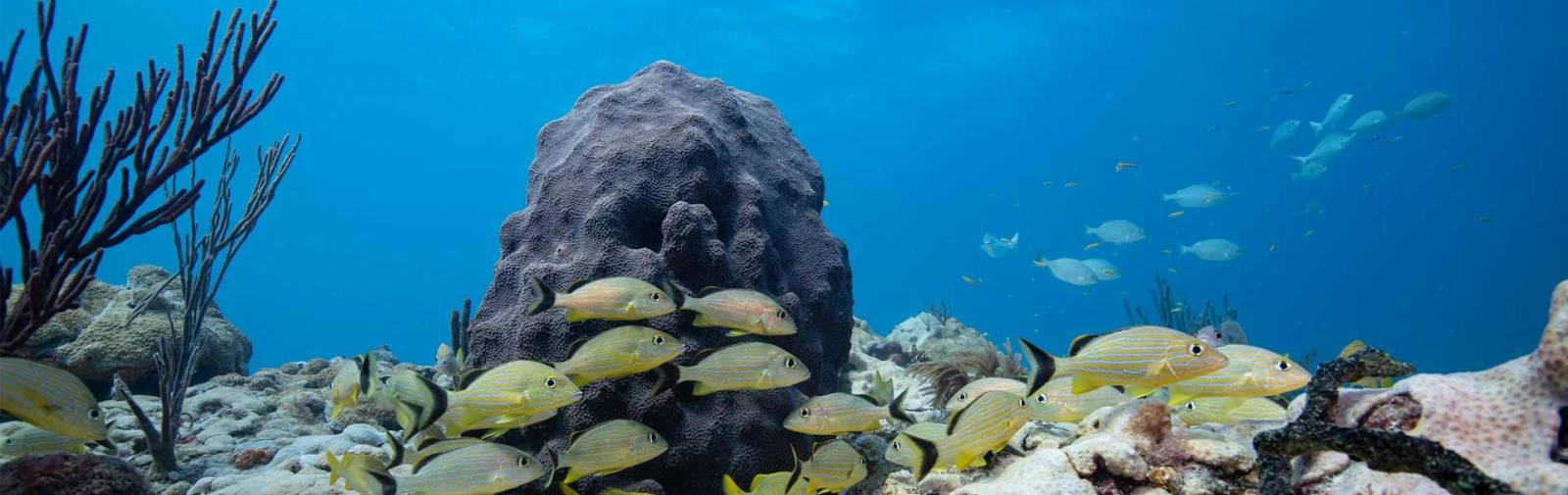
of the world’s largest coral reefs extends from Key West past Miami, Ft Lauderdale, West Palm, right on up the
coast to Martin County.
Narrator: In southeast Florida these coral reefs lie just a few hundred yards off the beaches of our
highly urbanized coastal communities. Roughly one third of Florida’s 18 million residents live within this
region, which attracted 25 million visitors in 2003. The proximity of such a highly urbanized area can sometimes
be detrimental to our beautiful coral reefs, which are very delicate and vulnerable to poor water quality,
coastal development, ship groundings, hurricanes and climate change. Corals need clean, clear water with low
levels of nutrients to survive and grow.
Ericka D'Avanzo, Surfrider Foundation: Water pollution is not only a health problem for surfers, divers a
nd anglers, but also a major threat to our coral reefs here in Martin County and everywhere else in South
Florida. Between the discharges from our estuaries and the outfalls all along our coastline, we are seeing
massive amounts of algae blooms all along our coral reefs which are not allowing our coral reefs to grow and s
urvive because they can't get any sunlight.
Narrator: The Southeast Florida Coral Reef Initiative’s Local Action Strategy is a roadmap for
collaborative and cooperative action among federal, state, local and non-governmental partners. The local action
strategy identifies key threats to the coral reef resources of southeast Florida and priority actions needed to
reduce those threats.
Chantal Collier, Coral Reef Conservation Program, Florida Department of Environmental Protection: The
Southeast Florida Coral Reef Initiative (also known as (SEFCRI) is a local action strategy that’s working to
implement over 100 projects addressing coordinating public education, minimizing threats to our local reefs and
helping to develop a management plan for the reefs north of Biscayne National Park. The Southeast Florida Coral
Reef Initiative is divided into four threat areas. Those include a lack of awareness and appreciation of the fact
that we have reefs in southeast Florida, and also impacts from recreational uses such as diving, fishing and
boating. We are also working to fight pollution from land based sources and also to mitigate impacts from
maritime industry and coastal construction.
Narrator: Southeast Florida’s reefs are exhibiting the same signs of degradation as reefs in other parts
of the world, but prior to SEFCRI, no coordinated public education or resource management plans had been proposed
for this area.
The coral reefs of southeast Florida need all the help they can get. As neighbors and visitors, we have a
responsibility to protect our coral reefs.
Terry Gibson, Florida Sportsman Communications Network: So many people fish in Florida, there is so much
commercial over fishing in Florida. We have to use ecological common sense when we go fishing. Just because the
laws say that you can put 10 limits of grouper or snapper in the boat, doesn’t mean that you should. Take home
what you need that night and leave the rest. When you cut out entire schools of fish, you cause what we call
cascading trophic impacts on the ecosystem. Everything feeds on something else and when you remove one level, the
whole system can collapse.
Narrator: Your daily activities make a difference.
How You Can Help
-
Fertilize minimally and irrigate efficiently to keep phosphorus, nitrogen and other pollutants from entering
our waterways.
-
Dispose of household chemicals, antifreeze, used motor oil and old batteries at one of your county's
household chemical recycling facilities.
-
Only buy fish and other seafood when you know it has been collected in an ecologically sound manner. Ask
store managers where their seafood comes from and how it is collected. Check out the Blue Ocean Institute’s
Guide to Ocean Friendly Seafood online at http://blueocean.org/programs/sustainable-seafood-program/seafood-choices/ to familiarize yourself with ocean friendly seafood and those that are
unsustainable.
-
Be a smart consumer. Shells and coral found in stores were once living components of a reef. The animals that
created these beautiful structures are usually destroyed to create the products. If you purchase aquarium
fish or coral, make sure they are native to your area and aquaculture-raised and harvested.
-
If you navigate your own boat, be sure to use navigational charts to avoid groundings and use mooring buoys
where available.
-
When diving and snorkeling, avoid touching or dragging your equipment over the coral. Contact with live coral
can injure and even kill delicate coral polyps.
-
Make sure the sewage from your boat and home is properly treated. Minimize your use of detergents, pesticides
and fertilizers, which can find their way into groundwater and the ocean. Even if you live hundreds or even
thousands of miles from the ocean, remember that you are part of a larger watershed and all rivers, streams
and canals eventually empty into our bays and oceans. In fact, 40% of the United States drains into the
Mississippi River, which feeds into the Gulf of Mexico’s loop current and eventually the Gulf Stream.
-
Properly dispose of recycling and garbage at home and at your workplace to avoid contributing to marine debris.
Terry Gibson: The ocean’s not a dumpster. It’s a shame to throw cups and beer cans overboard. But it’s
also important to recycle our monofilament and put that discarded monofilament or braid in a recycling bin.
Jeff Torode: As southeast Florida grows as a great snorkeling and diving destination, generating millions
of reef tourism dollars, the importance of a healthy ecosystem is vital. Divers and snorkelers are the eyes of
the ocean. We need to be in the forefront of coral reef conservation. But we also need to be mindful of our own
impacts to the coral reefs. We need to practice good diving etiquette as outlined by a lot of groups like PADI’s
Project Aware or Diving Alliance.
Ericka D'Avanzo: Conservation of our coral reefs can be done by anyone. Just make sure when you go to the
beach, take notice. If you see trash, pick it up. If you see things floating out in the water, try to bring them
in and put them in a garbage bag.
Dr. David Gilliam: I think one of the things that we can all do living in this huge population is
understand and be aware of this reef ecosystem and know that everything that we do in all of our daily activities
can affect the health and sustainability of this economically and ecologically important resource.
Chantal Collier: Through the Southeast Florida Coral Reef Initiative, Southeast Florida’s residents have
an opportunity to really come together as a community to become stewards of our local reefs. This is an
opportunity for people to actually take action above and protect what’s below.
Narrator: Protect the Southeast Florida Reefs for yourself and generations to come. To learn more about
the reefs and what you can do for them, visit
www.southeastfloridareefs.net or contact the Florida Department of
Environmental Protection Coral Reef Conservation Program by email at
coral@dep.state.fl.us.
Educate yourself, stay informed and spread the word.
Southeast Florida Coral Reef Initiative: Acting above to protect what’s below.
Credits
Biscayne National Park
Broward County Audubon Society
Broward County Environmental Protection Department
Broward County Extension Education, University of Florida IFAS
CCI Consulting Engineers Inc.
Coastal Eco-Group, Inc.
Coastal Planning and Engineering, Inc.
Coastal Systems International
College of Charleston
Cry of the Water
Dive Equipment and Manufactures Association
Environmental Defense
Florida Department of Environmental Protection (FDEP)
FDEP Beaches and Wetlands Resources
FDEP Southeast District Office of Water Facilities
Florida Fish and Wildlife Conservation Commission, Marine Habitat
Management Unit
Florida Keys National Marine Sanctuary
Florida Institute of Technology, Division of Marine and Environmental
Systems
Florida International University
Florida Marine Research Institute
Florida Outdoor Writers Association
Florida Sea Grant
Florida Sportsman Communications Network
Greater Fort Lauderdale Diving Association
Harbor Branch Oceanographic Institute
International Game Fish Association
Marine Industries Association of Florida
Martin County
Martin County School District Environmental Studies Center
Miami-Dade County Department of Environmental Resources Management
McMaster University
National Oceanic & Atmospheric Administration (NOAA)
NOAA National Marine Fisheries Service Habitat Conservation Division
National Coral Reef Institute at Nova Southeastern University
Ocean Watch Foundation
Ocean Engineering
Palm Beach County Department of Environmental Resources Management
PADI Project Aware
Port Everglades
Port of Miami
Port of Palm Beach
Reef Environmental Education Foundation
Smithsonian Institute Marine Station
South Broward High Marine Magnet School
South Florida Diving Headquarters
South Florida Water Management District, Everglades Division Field
Operation Center
Surfrider Foundation
Tetra Tech
The Nature Conservancy
The Ocean Conservancy
Tropical Audubon Society
University of Florida, Institute of Food and Agricultural Sciences
University of Georgia
University of Miami
University of North Carolina, Wilmington
University of South Florida
U.S. Army Corps of Engineers
U.S. Coast Guard, Marine Safety Office
U.S. Department of Agriculture, Natural Resources Conservation Service
U.S. Environmental Protection Agency, South Florida Water Management
Division Region 4
U.S. Geological Survey
Vone Research
Funding Acknowledgement: The Southeast Florida Coral Reef Initiative and the production of this video were
funded in part by a Coral Reef Conservation Program grant from the U.S. Department of Commerce, National Oceanic
and Atmospheric Administration, Office of Ocean and Coastal Resource Management and by the Florida Department of
Environmental Protection through its Coral Reef Conservation Program.
|