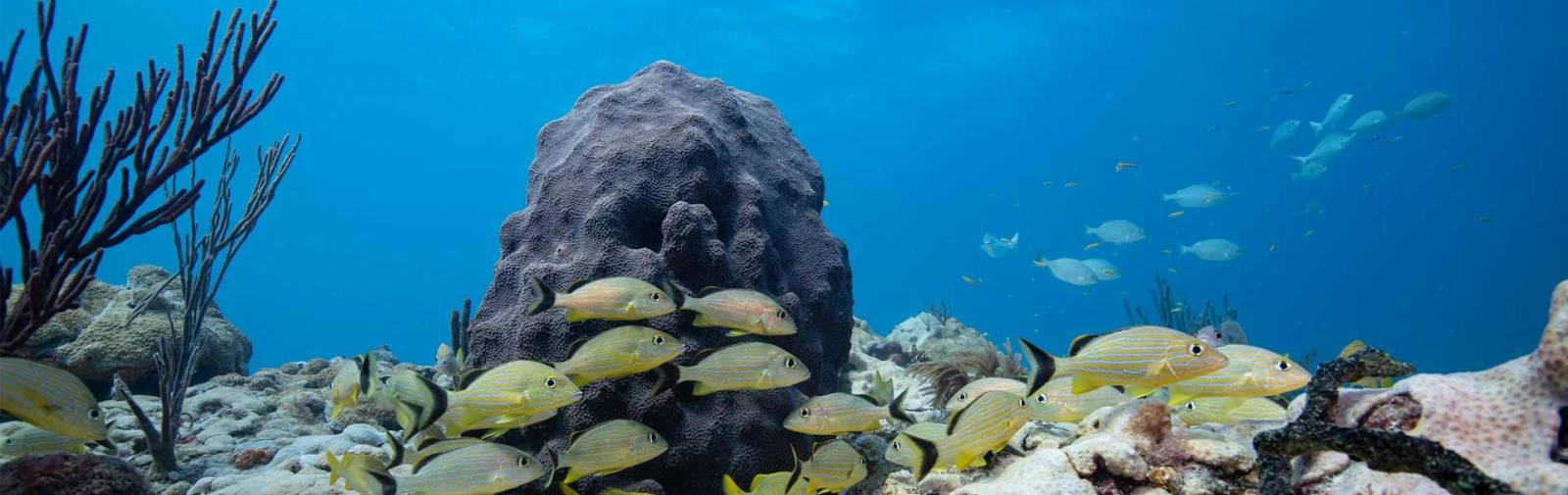
Florida’s Coral Reef extends over 350 nautical miles from the Dry Tortugas to the St. Lucie Inlet in Martin County. The five counties bordering the reefs are home to over 6 million people. South Florida’s economy and way of life are inextricably linked to the coral reef ecosystem. The reefs provide habitat for species that are valuable to commercial and recreational fisheries, serve as a new frontier for biomedical research, attract tourists who bolster our economy, and protect our coastlines from storms and flooding.
The Coral Reef Conservation Program manages the northern section of the reef, from the St. Lucie Inlet to the northern border of Biscayne National Park known as the Kristin Jacobs Coral Reef Ecosystem Conservation Area. These reefs support a rich and diverse assemblage of stony corals, octocorals, macroalgae, sponges and fishes. The Coral Reef Conservation Program coordinates research and monitoring, develops management strategies and promotes partnerships to protect the coral reefs, hardbottom communities and associated reef resources along Miami-Dade, Broward, Palm Beach and Martin counties.
Through its role in supporting Florida's membership on the U.S. Coral Reef Task Force and the U.S. All Islands Committee, the Coral Reef Conservation Program leads the implementation of the Southeast Florida Coral Reef Initiative and contributes to the National Action Plan to conserve coral reefs. The Coral Reef Conservation Program is also charged with coordinating response to vessel groundings and anchor damage incidents in southeast Florida, and developing strategies to prevent coral reef injuries.
Coral reefs are incredible natural resources that support the economy while providing opportunities for recreation, education, scientific research and public inspiration. The fish we catch rely on corals to build the reef structure where they can breed and grow. Current medicines that combat cancer, pain and inflammation have also been derived from coral reef organisms. The total tourism value of Florida's Coral Reef is estimated at $1.1 billion annually. Coral reefs are estimated to annually support 71,000 jobs in South Florida.
Healthy and resilient coral reefs safeguard against extreme weather, shoreline erosion and coastal flooding. Florida’s Coral Reef provides more than $355 million/year in flood protection benefits to buildings and protects nearly $320 million in annual economic activity (Storlazzi et al. 2019).
Friends of Our Florida Reefs is the citizen support organization for the DEP Coral Reef Conservation Program.
If you are interested in receiving updates or would like to sign up as a stakeholder, please contact the manager of the DEP Coral Reef Conservation Program, Rachel Skubel, at Rachel.Skubel@FloridaDEP.gov.
Interested in subscribing to DEP newsletters or receiving DEP updates through email?
Sign UpThe Florida Department of Environmental Protection is the state’s lead agency for environmental management and stewardship – protecting our air, water and land. The vision of the Florida Department of Environmental Protection is to create strong community partnerships, safeguard Florida’s natural resources and enhance its ecosystems.
Learn More