
|
To
CD Home >Water Resource
Management> Watershed
Management and Monitoring
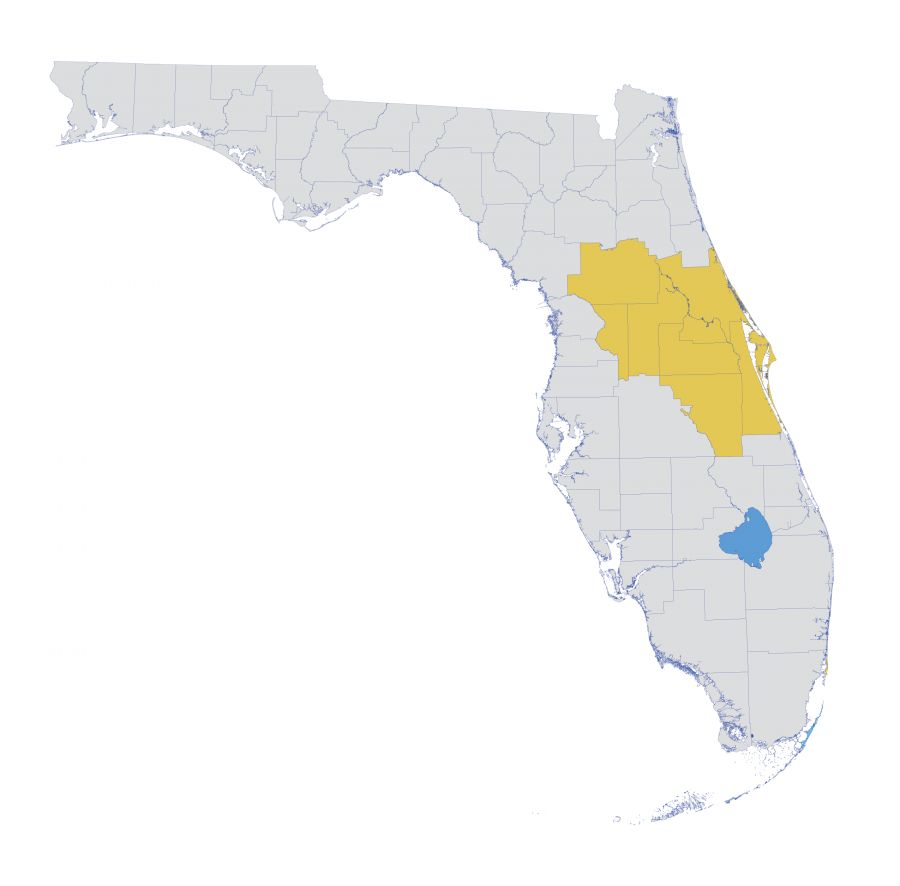
The biologists of the Central District Watershed Monitoring and
Management Program (WMM) conduct various biological assessments of water
bodies in the interest of TMDL development and ambient monitoring. All field
activities associated with biological sampling and assessments are done
in accordance to DEP's
Biological Field Activities SOP (FS 7000). Field staff are evaluated annually
to ensure compliance with prescribed methods. Certification requirements
for biological assessments are maintained and updated as needed.
|
|
BioRecon is the screening tool version of the
Stream Condition Index (SCI)- intended to rapidly assess a site
to prioritize it for more intensive sampling. The SOP for
Performing BioRecons varies from that for a Stream Condition
Index (SCI) sample in that only four dipnet sweeps of the most
productive habitats are performed. A Biorecon also differs from
an SCI sampling effort in that the organisms are sorted in the
field and then identified in the lab. Although the BioRecon
protocol only dictates that relative species abundance be
recorded on the BioRecon Field Sheet, samples of each taxa found
are verified in the laboratory. Regionally based thresholds
specific to this method have been established for each of six
calculated metrics (a subset of the ten metrics used in the
SCI).
The metrics incorporated into BioRecon
assessments include:
- Number of total macroinvertebrate species (taxa)
- Number of long lived taxa, those that require more than
one year to complete their life cycle
- Number of sensitive taxa
- Number of clinger taxa
- Number of Ephemeroptera (mayflies) taxa
- Number of Trichoptera (caddisflies) taxa.
|
top
|
FDEP SOP: FS 7310
 |
The Lake Vegetation Index (LVI) method involves
dividing a lake into 12 units and identifying plants in 4 of the
12 units. Plants are identified in each unit by a visual boat
"drive by" and also via a transect approach. A sampling tool is
deployed a minimum of five times in transect to look for
the presence of submerged aquatic plants. All plants for a unit
are recorded in a single column on the Lake Vegetation Index
Data Sheet and a dominant or co-dominant is assigned based on
aerial extent. Unknown plants are brought back for expert
identification and verification. The sampling season for the LVI
is May through November. Data generated on the presence of
species is used to calculate four biological metrics - each of
which has been shown to respond to human disturbance.
|
|
The metrics are:
- Native Taxa
- Invasive Taxa
- Sensitive Taxa
- Dominant Coefficient of Conservatism (C of C).
Aquatic Plant Identification References:
|
 |
| |
|
top
|
FDEP SOP: FS 7450

|
The Dredge method involves taking three or more replicate grab
samples with a Petite PONAR or Ekman sampler. The entire sample is
sorted and all organisms are identified to the lowest practical
taxonomic level. The Shannon-Weiner Diversity Index is calculated for
the whole sample. |
|
FDEP SOP: FS 7230
 |
The Rapid Periphyton Survey (RPS) quantifies the extent and
abundance of algae in a 100 m stream segment. Nine observations
are made every 10 m for a total of 99 observations (11
transects, including 0 and 100 m marks). A canopy measurement is
made at the mid-point of each transect using a spherical
densiometer. A small handful of substrate is randomly
collected at each transect point and is visually examined for
the presence/absence and for the type of algae (filamentous,
diatom, or other). The average thickness is measured
perpendicular to the substrate and this noted on the Rapid
Periphyton Survey benchsheet. The results of this sampling will
allow for the eventual development of expectations for both
reference sites and those where the algae may be interfering
with the designated use of a waterbody. |
top
|
FDEP SOP: FS 7420
 |
The SCI is a composite
macroinvertebrate index for use in flowing streams. Sampling
consists of 20 dipnet sweeps of the most productive habitats
found in a 100-meter stretch of a stream. Organisms collected
in these sweeps are brought back to the laboratory for
processing. Data generated on the species and abundance of
these organisms is used to calculate ten biological metrics -
each of which has been shown to respond predictably to human
disturbance.
The metrics are:
- Number of total taxa
- Number of long lived taxa, those that require more than
one year to complete their lifecycle,
- Number of Ephemeroptera (mayflies) taxa,
- Number of Tricoptera (caddisflies) taxa,
- Number of Florida sensitive taxa
- Number of clinger taxa
- Percent dominant taxon
- Percent Tanytarsini
- Percent very tolerant taxa,
- Percent filterers.
|
|
top |
return to
Central District home
Contact List-
Watershed Management and Monitoring
Central
District Office
Watershed Management and Monitoring Section
3319 Maguire
Blvd, Suite 232
Orlando,
Florida 32803-3767
phone: 407-897-4100
fax: 850
412-0472
If you have technical problems with the functioning of this web site,
please e-mail
our webmaster.
|
Central District Watershed Management & Monitoring Site Map
Watershed Management and Monitoring
Around the State
Watershed Management Monitoring information from the Division of Water
|