

Country Club Estates Agencies and Roles
Please be aware we are still compiling answers to all the
questions received via notecard at the meeting and will be
updating the website with the remaining answers very soon. Anyone who
asked a question and provided contact information will be
personally contacted by our office.
What does the Florida Department of Environmental
Protection do?
- The Florida Department of Environmental Protection (DEP)
is the lead agency in Florida for environmental management.
DEP’s mission is to protect, conserve, and manage Florida
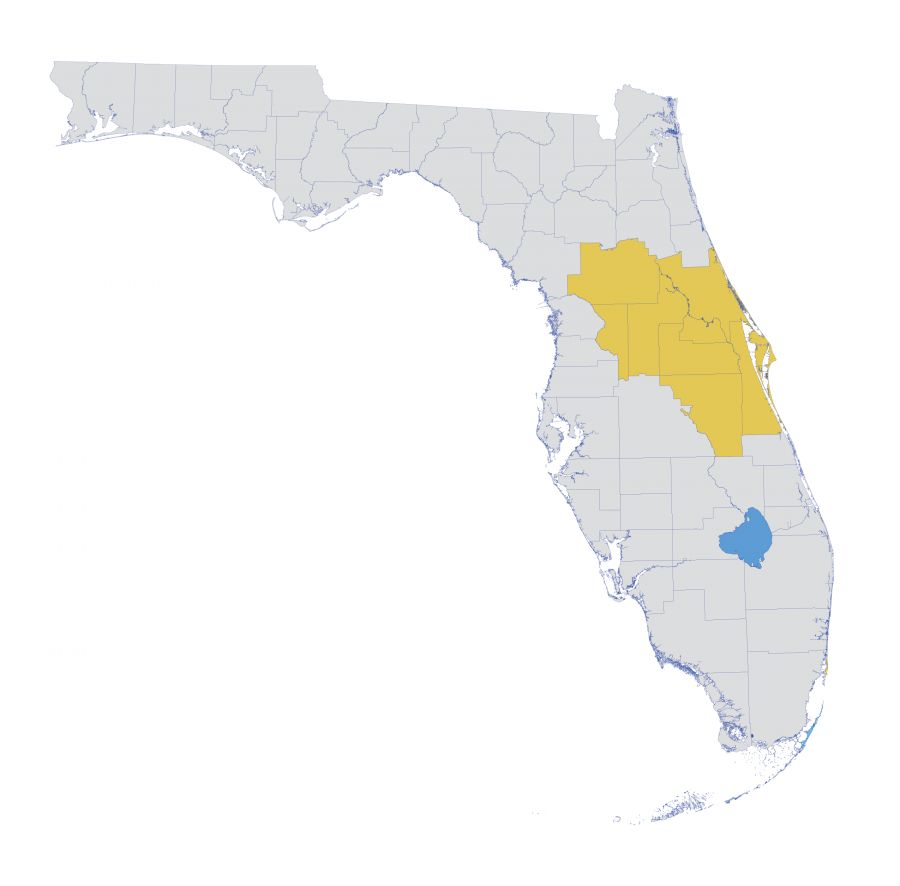
environment and natural resources. There are six DEP
regulatory district offices throughout the state. DEP’s
Central District Office is located in Orlando and serves
Marion, Volusia, Lake, Seminole, Orange, Osceola, Brevard,
and Indian River counties.
What does the Florida Department of Health do?
- The Florida Department of Health (DOH) is the lead
agency in Florida for public health services. DOH’s mission
is to protect and promote the health of all residents and
visitors in the state through organized state and community
efforts, including cooperative agreements with counties.
Each Florida County has a public health unit that works in
conjunction with the Tallahassee DOH Headquarters.
What does the Volusia County Health Department (VCHD)
do?
- Volusia County Health Department’s Division of
Environmental Health is a branch of public health and
preventative medicine. It is concerned with the prevention
of injury and disease by controlling the links between
humans and their environment. Environmental health programs
seek to minimize or eliminate risk factors in the human
environment when they threaten life and health. The basic
implementation of each environmental health program
component includes public education, inspection,
investigations, permitting and enforcement of public health
laws.
What is DEP’s role?
- DEP manages the Water Supply Restoration Program (WSRP)
which provides for expeditious restoration or replacement of
potable water systems or private wells where health hazards
exist due to contamination.
- DEP's Site Investigation Section (SIS) conducts
environmental assessment througout the State of Florida. SIS
is actively conducting an investigation in the area of
Country Club Estates, DeLand.
What is DOH’s role?
- DOH provides scientific expertise to determine if a
cluster, or an unexpected increase or grouping of cancers is
present in a community. Collaborating with state and federal
partners, DOH seeks sources or causes for these increases.
What is VCHD’s role?
- VCHD establishes the well sampling schedule in
accordance with the protocol established in the Department
of Health’s’ Well Surveillance Program Technical Guide. VCHD
collects samples and reviews laboratory reports.
- VCHD permits and monitors public drinking water
suppliers in Volusia County to ensure compliance with the
safe drinking water act.
- VCHD answers dieldrin’s health effects questions and
communicates health information to the community. See
www.volusiahealth.com for more information.
Did DEP investigate the community's ideas about
potential sources of contamination?
- Yes. Some residents were concerned about illegal
dumping of dieldrin in sinkholes, a local golf course as a
source, reclaimed water as an irrigation source on a cow
pasture and individual water well concerns. In many cases,
DEP staff took soil samples and tested based on those
concerns.
Did DEP collect any soil samples as part of the site
investigation?
- Yes. During the course of this study, SIS collected over
200 soil samples from various locations across the site. The
purpose of these soil samples was to determine whether
historical application of dieldrin had occurred.
• 34
soil samples were collected from the golf course. • 120
soil samples were collected from residences with 90 of these
collected from lawns and the remaining 30 from beneath the
foundation of homes. • 4 soil samples were collected
from a topographically low area located in the central
portion of the neighborhood near Pennsylvania Drive as
several residents reported concerns that illegal dumping of
dieldrin had occurred at this location. • 4 samples were
collected from pasture located on East Taylor Road with the
purpose of determining whether the usage of reclaimed
irrigation water with detectable levels of dieldrin had any
measurable impact on soils. • 39 soil samples (from 17
locations) were collected at the former Aaron Pest Control
site
Will DEP be cleaning up the dieldrin soil
contamination at my home?
- No. When a pesticide such as dieldrin is present as the
result of proper use of a product, DEP typically does not require
cleanup. DEP has no funding to conduct a cleanup under these
circumstances.
Will DEP remediate the ground water
contamination?
- We want to be clear – public health is always our
top concern. Although DEP will not perform ground water
remediation, homeowners with water deemed unsafe to drink
due to dieldrin contamination are eligible for assistance
from DEP’s Water Supply Restoration Program. DEP’s goal is
to provide a safe, alternative source of drinking water for
the community. The installation of city water lines into the
community makes public water available to anyone in the
community who would like to connect.
My neighbor’s well has very high levels of dieldrin; my well was
deemed safe to drink. Why is there a difference when our wells
are located near one another?
-
There are many factors which contribute to varied
results from parcel to parcel. Most commonly, well
construction and integrity as well as lack of separation of
shallow ground water from deeper ground water account for
these differences. SIS determined contaminated potable wells
are distributed in an apparently random pattern throughout
the neighborhood. There are a few areas, such as along
Harvard Road and Yorkshire Drive, where the distribution of
contaminated wells appears to be more concentrated, however,
in most instances, wells free of dieldrin are distributed
amongst contaminated wells.
-
Data collected provides evidence that water
produced from dieldrin-contaminated supply wells is a
mixture of shallow and deep ground water. It is the opinion
of SIS that in some cases corroded well casings and
un-grouted annular spaces in supply wells are allowing for
the downward migration of shallow ground water with dieldrin
into many of the supply wells in the neighborhood.
In other cases, lack of separation of shallow ground
water from deeper ground water used for drinking water is
causing dieldrin contamination of drinking water wells.
Has DEP set any standards for acceptable levels of
dieldrin contamination in soil in Country Club Estates?
- DEP does not have statewide soil standards. However, when
cleanup is required as a result of a spill or dumping of a
chemical onto the ground, Soil Cleanup Target Levels (SCTLs) are
used to determine when cleanup is complete. There are two types
of SCTLs for each contaminant:
- Direct Exposure-based SCTLs that are established to
protect people who may have direct skin contact or
incidental ingestion of contaminated soil. The DEP does not
generally enforce Direct Exposure-based SCTLs when a
pesticide is present as a result of proper use of a
product.
- Leachability-based SCTLs that are established to prevent
contaminants that are in the soil from leaching into the
groundwater as rain water passes through the contaminated
soil. The Leachability-based SCTLs may be enforceable if
dumping, spilling, or misapplying a pesticide can be linked to
groundwater contamination.
What
laboratory does DEP’s use for samples collected as part of the
site investigation?
- Samples collected as part of the site
investigation will be analyzed by DEP’s central laboratory in
Tallahassee.
Is there a DEP web page
for the Site Investigation Section?
Where can the final SIS report be
found?
What is DEP’s role when dieldrin results are greater than
0.002ug/L in a private well?
- DEP’s Water Supply Restoration
Program is providing an alternative source of potable water to
homeowners with dieldrin levels at or above the State’s Health
Advisory Level. Homeowners with results equal to or greater than 0.002 ug/L
are notified by letter of their eligibility for the Water Supply
Restoration Program. Homeowners who elect to participate are
provided bottled water coupons until a filtration system or
connection to public water can be completed.
As part of the WSRP, do
homeowners pay for filters and connection to city water?
- The
expense of filter installation and/or connection to city water
for eligible property owners is covered by the Water Supply
Restoration Program. Homeowners who would like to connect to the City of Deland’s public
water system will be required to submit an application for water
service with the city. Once the connection is complete, the
homeowner will be required to pay monthly water bills.
Are homeowners required to participate in the program?
- No.
DEP’s Water Supply Restoration Program is a voluntary program.
How does a homeowner enter into the program?
- Homeowners who are eligible for the program are notified via
letter. A form titled “Request for Water Supply
Restoration/Replacement” is included with the notification
letter. To participate in the program, simply complete the form
and mail it to:
Can homeowners with dieldrin
results less than 0.002 ug/L participate in the program?
- No.
Potable wells with less than the health advisory levels are
deemed safe to drink from, thus they are not eligible for the
program.
Is there a DEP web page for the water supply
restoration program?
|